I use the Netfree filter, which I really like.
Even filter has its drawbacks, but this is my favorite yet.
However, because there's no other filter like it, people don't understand how it works unless they've actually sat down and used it.
People helpfully send me links to websites and videos — most of which I cannot open.
I can ask Netfree to open a website or video, but they often want me to describe exactly what's in it first, and sometimes who the blogger is. Furthermore, they are free to refuse to open the site or video and they often do. (This is one of the reasons I took this filter, but the occasional downside is a site I would really like open and for whatever reason, it doesn't meet their standards.)
But Netfree blocks most of the Internet (again, that's why I chose them) and what's available is what they already agreed to open. If you send me a link to a fairly recent video, for example, it is usually not yet open, unless another Netfree user already requested it.
Some pre-approved websites, like Bilvavi and Toras Avigdor, are completely open, no blocking any page or text of it.
The filter works via bots programmed to pick up certain words or content.
When they need human eyes, Netfree turns to its team in India. There, non-Jewish men scan the content and images and approve (or not) according to Netfree's standards.
But like I said, it's hard to visualize it if you haven't seen it.
So here it goes...
Even filter has its drawbacks, but this is my favorite yet.
However, because there's no other filter like it, people don't understand how it works unless they've actually sat down and used it.
People helpfully send me links to websites and videos — most of which I cannot open.
I can ask Netfree to open a website or video, but they often want me to describe exactly what's in it first, and sometimes who the blogger is. Furthermore, they are free to refuse to open the site or video and they often do. (This is one of the reasons I took this filter, but the occasional downside is a site I would really like open and for whatever reason, it doesn't meet their standards.)
But Netfree blocks most of the Internet (again, that's why I chose them) and what's available is what they already agreed to open. If you send me a link to a fairly recent video, for example, it is usually not yet open, unless another Netfree user already requested it.
Some pre-approved websites, like Bilvavi and Toras Avigdor, are completely open, no blocking any page or text of it.
The filter works via bots programmed to pick up certain words or content.
When they need human eyes, Netfree turns to its team in India. There, non-Jewish men scan the content and images and approve (or not) according to Netfree's standards.
But like I said, it's hard to visualize it if you haven't seen it.
So here it goes...
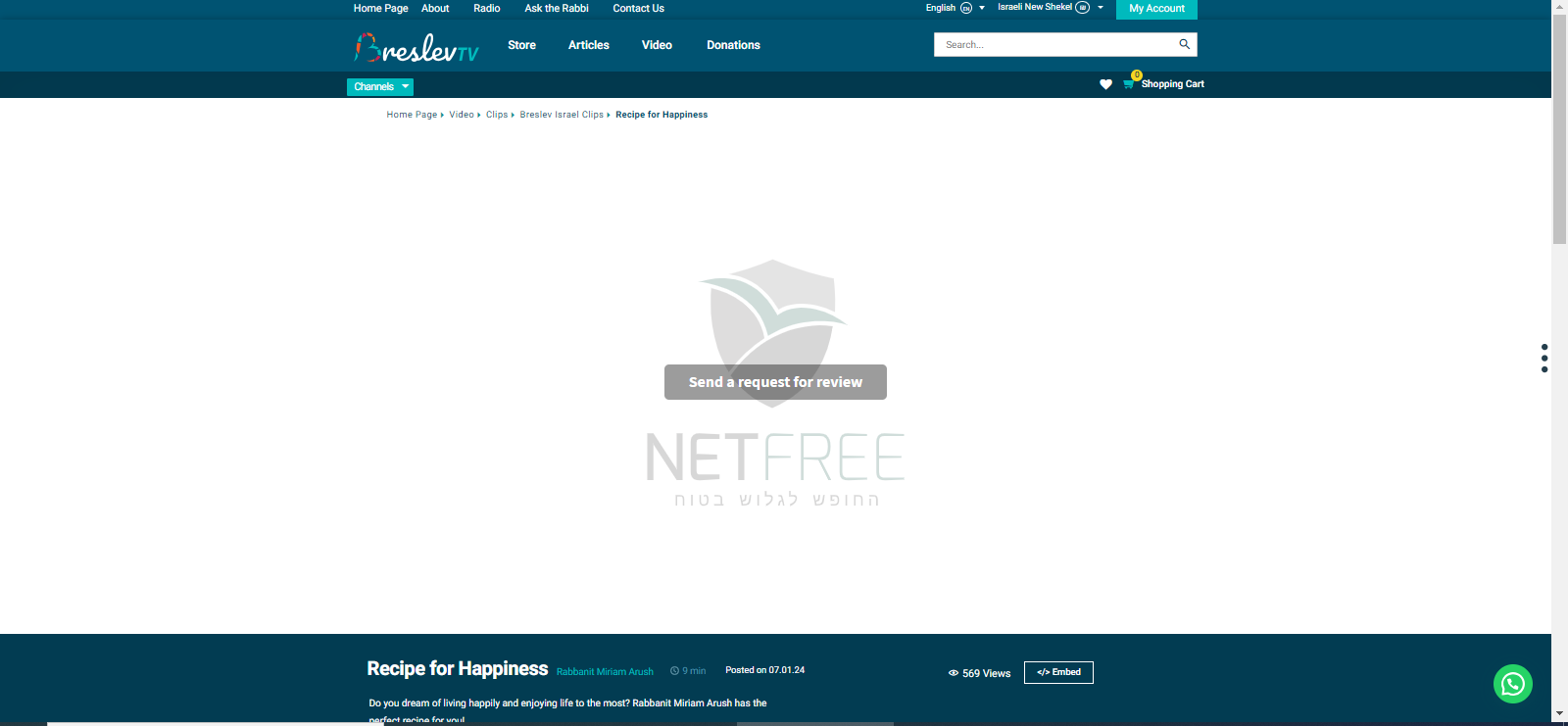
When I come across a not-yet-approved video, this is what I see on my computer screen (please note the statement: Send a request for review):
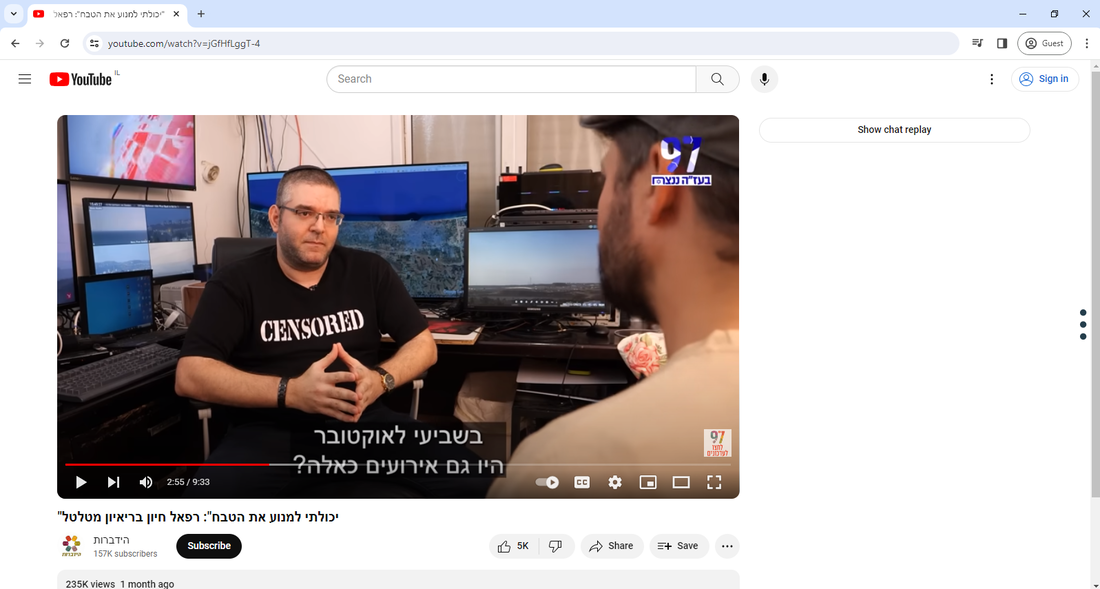
If the video is approved, then the video appears like this below (please note the lack of suggested videos and comments around the YouTube video — I enjoy the clutter-free algorithm-free look):
Again, most of YouTube, including entire channels, are blocked for me.
Yet even when they're open, not every video is approved. For example, here is what I see on the Hidabroot's YouTube site:
Yet even when they're open, not every video is approved. For example, here is what I see on the Hidabroot's YouTube site:
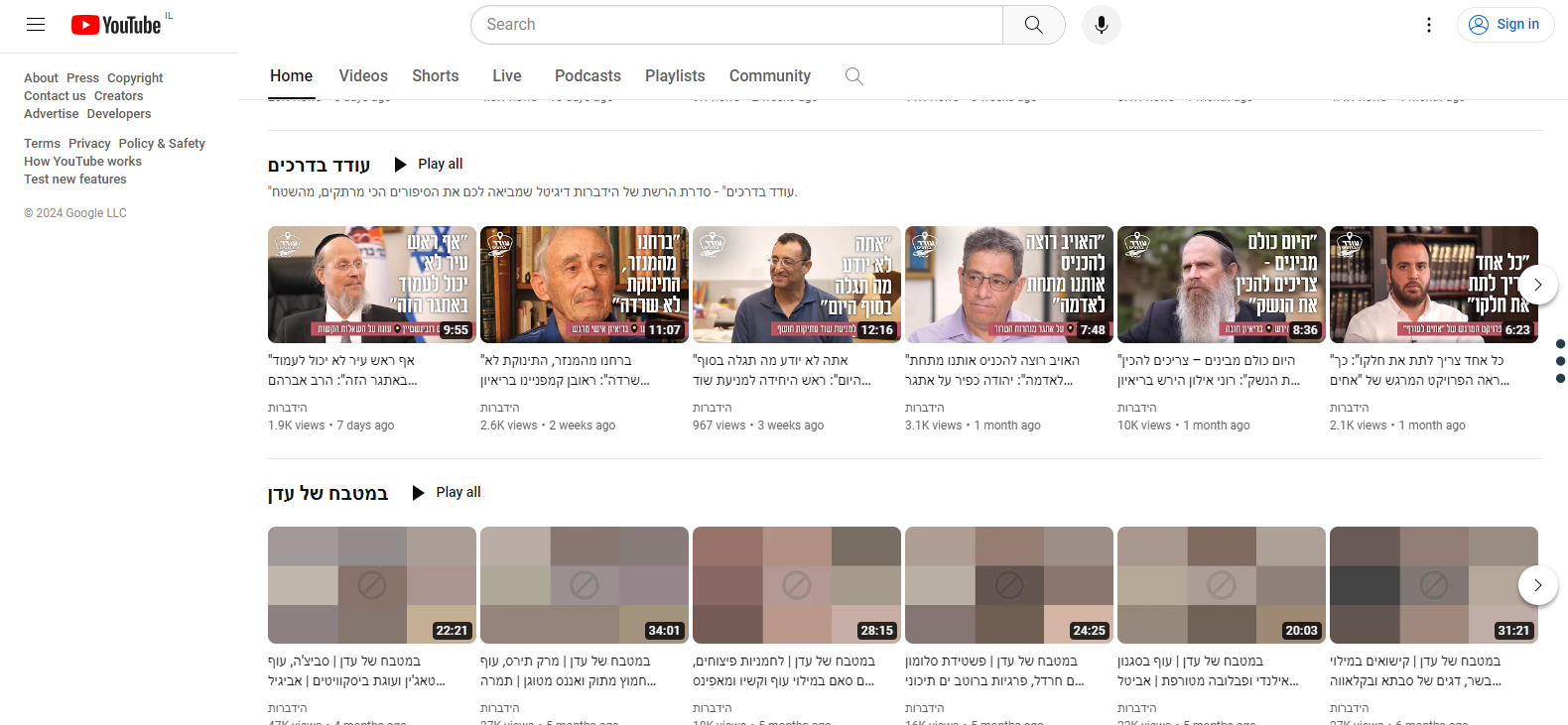
Please note all the blocked videos.
Despite being blocked, I can still often find the link to a video I cannot see — I just can't see the video itself.
(As explained in previous posts, if I see a video not accessible in Netfree, then it means someone else showed it to me on THEIR device, not mine.)
Because I can see the caption of the video, I simply hover my mouse over the video and the link appears.
If I click on an unapproved video, this shows up on my screen (again, please notice how it shows the link's address, but not the video itself):
Despite being blocked, I can still often find the link to a video I cannot see — I just can't see the video itself.
(As explained in previous posts, if I see a video not accessible in Netfree, then it means someone else showed it to me on THEIR device, not mine.)
Because I can see the caption of the video, I simply hover my mouse over the video and the link appears.
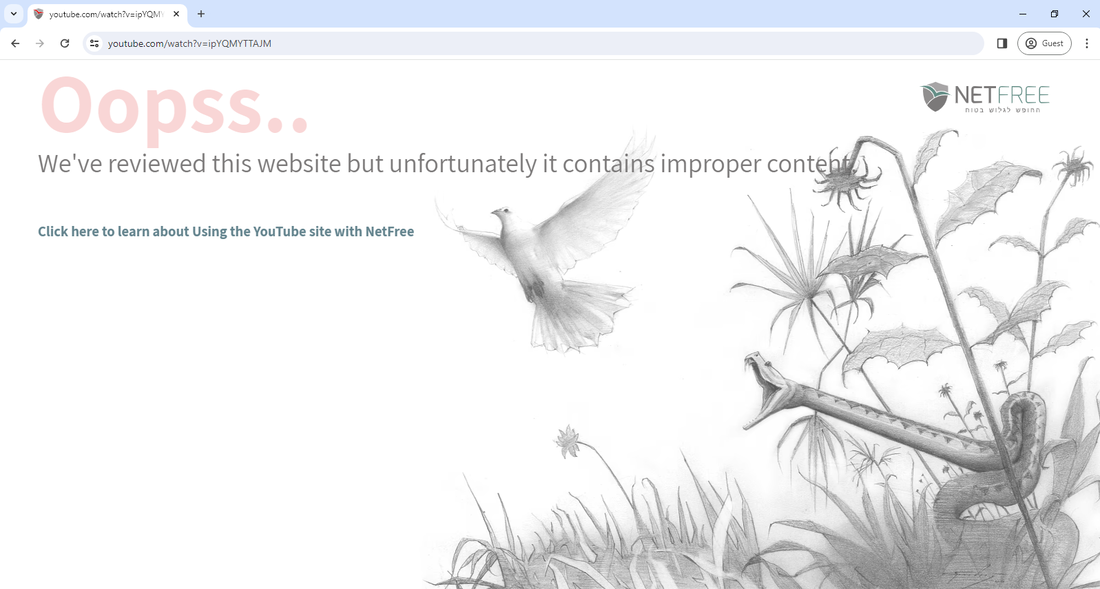
If I click on an unapproved video, this shows up on my screen (again, please notice how it shows the link's address, but not the video itself):
Or sometimes the message states: We are looking for ways to filter this site.
Or I get this:
Or I get this:
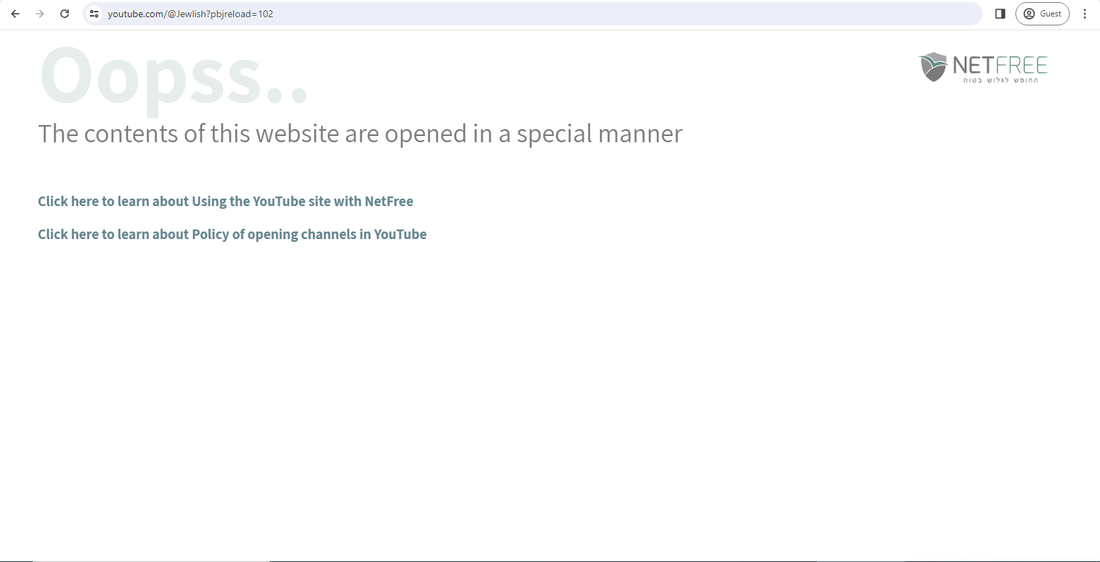
When I make a search, all unapproved sites are blocked.
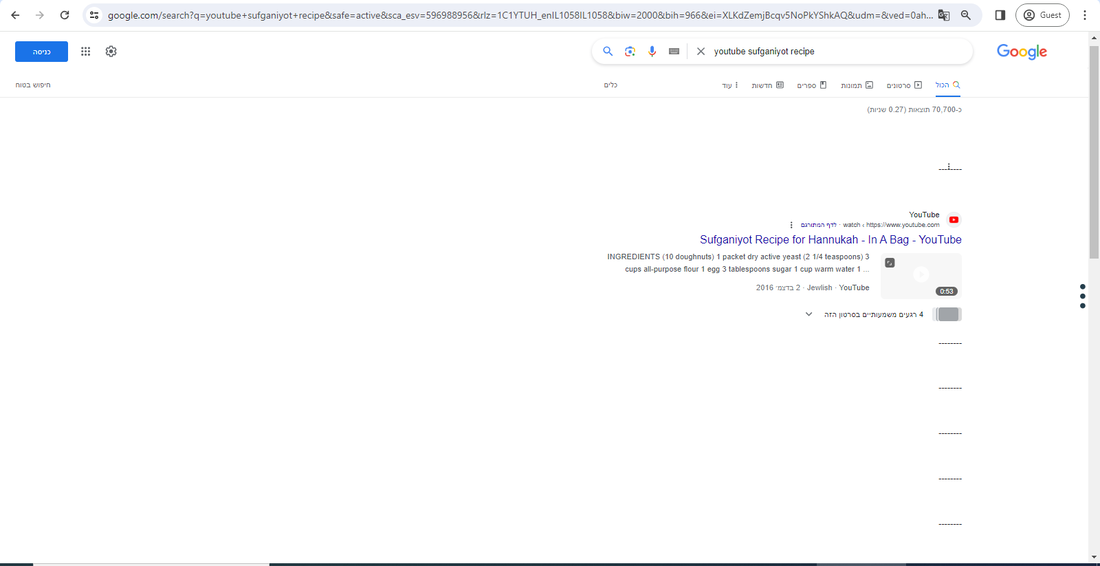
So for example, when I search for videos of sufganiyot recipes, this is how the search looks (and any search looks like this):
So for example, when I search for videos of sufganiyot recipes, this is how the search looks (and any search looks like this):
When images pop up, they often look like this:
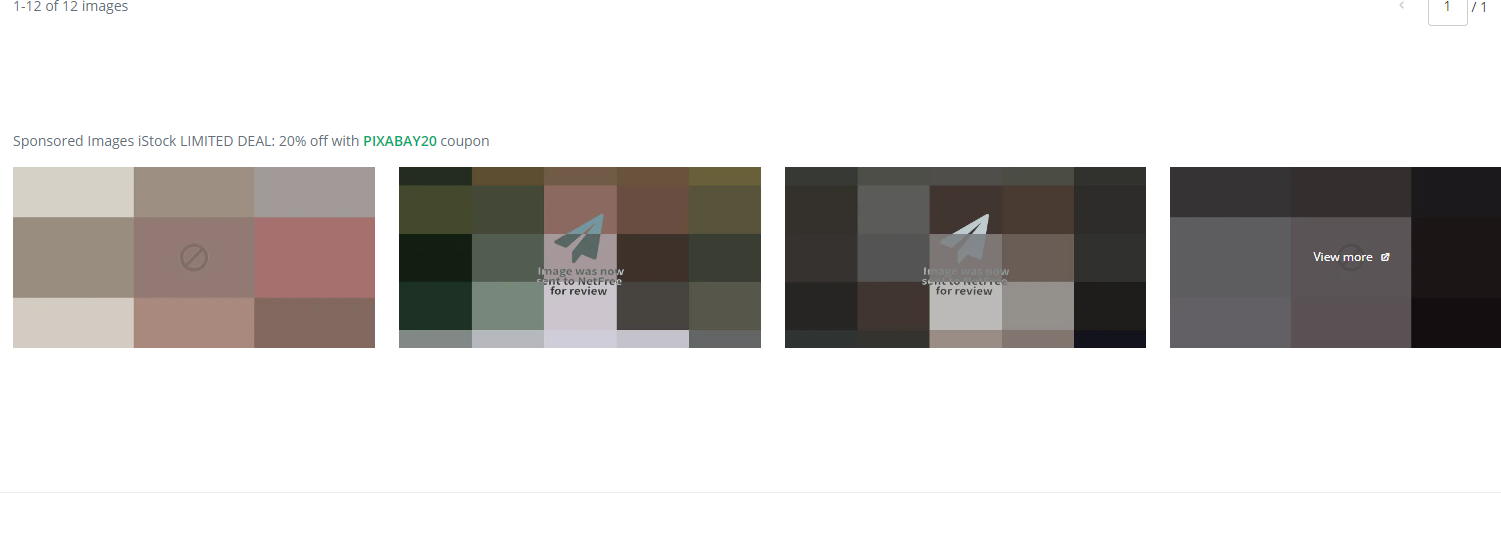
Please note in the above image how one is already blocked, while the others state: Image was now sent to Netfree for review.
Okay, I hope this helps you understand how things work for me and what I'm seeing when you send me links.
Sometimes, people copy and paste the text of what they want me to read into the body of the email, but I rarely ask anyone to go to the trouble of doing so.
There are also different levels of filtering to choose from on Netfree with everything available in Hebrew and English. You can even just have email only or email with government & bus/train schedule websites only.
You can also have it opened a little bit more than the level of filtering I chose.
I enjoy this filter a lot and highly recommend it. Again, no filter is perfect and you can talk to them about what you want opened or what you want closed.
But this filter is unique in the World Wide Web.
Sometimes, people copy and paste the text of what they want me to read into the body of the email, but I rarely ask anyone to go to the trouble of doing so.
There are also different levels of filtering to choose from on Netfree with everything available in Hebrew and English. You can even just have email only or email with government & bus/train schedule websites only.
You can also have it opened a little bit more than the level of filtering I chose.
I enjoy this filter a lot and highly recommend it. Again, no filter is perfect and you can talk to them about what you want opened or what you want closed.
But this filter is unique in the World Wide Web.









 RSS Feed
