"Instead of stinging nettle, myrtle will rise" (Isaiah 55:13)
 "Instead of evil, good will rise." (The Malbim's Interpretation)
Myrtle Rising
  • Blog
  • Blog Updates
    • Privacy Policy
  • Aliyah
    • Mini-Intro
    • General Cultural Insights
    • School Tips
  • Kli Yakar Index
  • Most Popular
  • Contact

Bilvavi Q&A: Exploring the Little-Known Yet Profound Connection between ​Tu B'Av and the Third Beit HaMikdash

28/7/2026

 
This Q&A with the Bilvavi author of Building a Sanctuary within the Heart explores a little-known topic regarding the 15th of Av and the Third Beit HaMikdash.

​Paradoxically, despite the violent destructions of the first and second Beit HaMikdash, those destructions only happened in our dimension.

In seemingly reverse order, the Third Beit HaMikdash existed all along as the root of the other two.

And that Third Beit HaMikdash exists.

When we talk about rebuilding it, we mean in our dimension and how its revelation will be experienced in This World.

​The Beit HaMikdash provides the best conduit toward connecting with Hashem. 

Within the Beit HaMikdash, which beautifully affects all one's physical senses, which enhances the spiritual and emotional inspiration, one can experience the true joy, wisdom, and love of connecting with Hashem.

So please enjoy this enlightening excerpt from Bilvavi Newsletter #408:
​TU B’AV & THE 3RD BEIS HAMIKDASH

QUESTION
While it’s true that the third Beis HaMikdash was never destroyed, there certainly was a destruction that took place to the first and second Beis HaMikdash.

So what does it mean that there will be a revelation that there had never been a destruction of the Beis HaMikdash?

ANSWER
It is written about the future that we will say, “Then, we were like dreamers” (Tehillim 131:2).

We will be shown that whatever we saw in this exile was entirely from a lower world, a lower perception, when compared to the higher world and higher perception that we will be in the future, which will make this lower world into a fantasy when compared to that higher world.

​Compare this to a person who gets older and matures, who views a child as living in a fantasy world.

But for the time being, as long as you remain on the lower world and you have its perspective, it is reality for you.

That is the secret of Creation – the fact that there are levels of worlds within Creation, and a lower world has a lower perception and is considered a fantasy when we have the view from the world that is above it.

QUESTION
Is the third Beis HaMikdash an entirely new structure independent from the first and second Beis HaMikdash?

ANSWER
The [Heavenly] Beis HaMikdash is the root, while the first and second Beis HaMikdash were its branches.

QUESTION
Also, since Tu B’Av is the glimmer of light from the future revealing how there never was a destruction, why then do we cry and mourn every year over the destruction of the Beis HaMikdash if really there was never a destruction?

While it’s truth that this is a revelation which will only be in the future, the Rav has explained that this light is shining already now, so why do we ignore that light?

ANSWER
In the Gemara, the view of Rebbi Shimon is that “retroactively” only means “from now and onward it is retroactive” – as opposed to “retroactively” in the simple sense.

In the the world we are in now, there is destruction and that is the actual reality – practically speaking and in the halachic sense.

But when compared to the revelation of the future, all of This World is a fantasy.

QUESTION
Is Tu B’Av connected with the concept of getting up after Chatzos on Tisha B’Av where we console ourselves, where amidst the day of destruction we reveal a light, the light of consolation (nechamah), and is that consolation essentially the inner light that there never was a destruction of the Beis HaMikdash, and we reveal that light precisely amidst that dark day?

ANSWER
​Yes! Yes!

​But it is only a spark of the light, not the absolute level of the light.

QUESTION
​The sefer Bnei Yissocher states the third Beis HaMikdash will be built in the month of Cheshvan, but the Pesikta states that it will be rebuilt a few days after Tisha B’Av.

Is there a disagreement here in Chazal about when the 3rd Beis HaMikdash will be rebuilt?

ANSWER
Av is when it will begin to be built, and Cheshvan is when it will be finished.

It will begin to be built in Av, which implies beginning (an av/father precedes his child.

​And Av is an acronym for Aleph Beis, the beginning two letters), also referring to the level of the human being, thus the 3rd Beis HaMikdash will begin to be built in Av.

It will finish being built in Cheshvan, which contains the letters of the word “Nachash” (Serpent), which will be the revelation of the concept of “Serpent” on the side of holiness.

Just as the Serpent was cursed with having to slither by the “heels”, which is the endpoint, so will the “Serpent” on the side of holiness by the endpoint that will reveal holiness.

QUESTION
In the Kinnos, we cry over the ten holy martyrs who were killed al kiddush Hashem by the Romans, but astoundingly there is a novel interpretation from Rabbeinu Bechaye (Parshas Mikeitz 44:17) who says that a miracle happened for them and their bodies were switched with [specific deserving umos haolam] who were killed instead of them – and in addition, they didn’t even suffer any pain.

HaGaon R’ Y.M. Morgenstern shlit”a explained that even though one of the sages screamed the entire night, it was not because of any physical pain, but because he was in pain over the chilul Hashem that the generation thought that the sages were being killed and disgraced.

And sefer Arvei Nachal (Parshas Masei) says that he has a tradition that anyone killed al kiddush Hashem doesn’t feel any pain.

But according to Rabbeinu Bechayeh, the sages were not killed nor did they suffer any physical pain.

According to his novel interpretation, why then do we need to cry over them during Kinnos if really they weren’t killed (because their bodies were miraculously switched...instead...)?

ANSWER
There is the mode of nature.

And in nature there was a decree of death on them, thus we cry over the destruction that was unleashed on them in the form of the harsh decree on them.

​Those sages rose from there through a miracle.

But the decree remained in nature, and it wasn’t annulled.

So the crying over them is not about the results of the decree, if they would be sentenced to die or not.

​Rather the crying was about the very decree itself, the destruction that had descended onto the world and which was dominating then, regardless of what the results of it would be.

​Please note: Rav Itamar Schwartz lovingly opposes all forms of the Internet & has no connection to the Bilvavi website.
Rav Schwartz has no more connection with the Bilvavi website than Rav Kanievsky ztz"l did with all the websites that post videos & quotes of him.
For more explanation, please see the Disclaimer here:
https://eng.bilvavi.net/opinion/

Here is some biographical information on Rav Itamar Schwartz (copied from here: 
bilvavi.net/back-issues/eng/Bilvavi_234_Shemini_Taking%20Shelter_5782.pdf):
The Rav attended the Pachad Yitzhak Yeshiva of Rav Yonasan David, Shlit"a and graduated from the Ponovitch Yeshiva of Rav Gershon Edelstein, Shlit"a.

The earliest of more than 50 sefarim of the Rav were enthusiastically endorsed by Rav Gamliel Rabinovitch, Shlit"a, Rav Moshe Sternbuch, Shlit"a, Rav Yitzchak Zilberstein, Shlit"a, the Tolna Rebbe, Shlit"a, Rav Moshe Mordechai Karp, Shlit"a, amongst others.

Using an eclectic approach, the Rav's teachings speak to the hearts of Jews from all walks of life.
In fact, here is a list of rabbanim who approved the book:
HaRav Sraya Deblitzky z”l
HaRav Yechiel Fishel Eizenbach z”l
HaRav Chizkiyahu Alexander Erlanger z”l
HaRav Moshe Halberstam z”l
HaRav Moshe Mordechai Karp Shlit”a
HaRav Itche Meyer Morgenstern Shlit”a
HaRav Aharon Zvi Rumpler z”l
HaRav Moshe Shmuel Shapiro z”l
HaRav Chaim Pinchas Scheinberg z”l
HaRav Moshe Sternbuch Shlit”a
HaRav Emanuel Toldeno z”l
HaRav Yitzchock Menachem Weinberg, Tolna Rebbe Shlit”a
HaRav Yitzchok Zilberstein Shlit”a
eng.bilvavi.net/bilvavi-part-one/

What's the Message of the Erev Rav for Us on 17 Tammuz?

2/7/2026

 
The first tragic event to occur on the 17th of Tammuz was Moshe Rabbeinu breaking the first set of Tablets when he saw the Jewish Nation worshiping the Golden Calf.

(For a synopsis of the tragedy, please see What was the Golden Calf?)

How did the Jewish people go from the Divinely gifted exalted spiritual level necessary to receive the Torah in all its glory to worshiping an idol only 40 days later?

The Original Fake News & Its Twin: Fake Fear

Moshe Rabbeinu promised to be up on the mountain with Hashem for 40 days, after which he would return.

​The people miscalculated, so when Moshe Rabbeinu didn't come back on the 16th of Tammuz, they started to worry.

Or did they?

It was actually the Erev Rav who started to stress out about it...but not for the reasons you might think.

Well-aware of Hashem's objection to their presence and knowing it was Moshe Rabbeinu who allowed them to join along, the Erev Rav feared that without Moshe Rabbeinu, they'd be kicked out by Hashem (as if Hashem couldn't just kick them out anytime He chose to).

This explains why the Erev Rav believed they needed to create a new leader, and to do it on the double.

So they sounded an alarm of sorts, which affected the emuna of the Jews.

In addition, the satan (a prosecuting angel) adjusted nature to provide a gloomy atmosphere.

And thus, rather than taking the emuna-driven "Let's wait and see" approach of yishuv hadaat, the true Jews of Yisrael got sucked into the Erev Rav fear.

Important Reminder:
  • Am Yisrael NEVER had anything to fear.
  • They were beloved to Hashem.
  • So even if something had happened to Moshe Rabbeinu, Hashem would still take care of Yisrael as a mother cares for her newborn baby.
  • It was the Erev Rav who stood to lose out if Moshe Rabbeinu didn't return.
  • The Jews would have been fine all along NO MATTER WHAT.

In other words, Am Yisrael panicked for NO REASON WHATSOEVER.
​
And that was their first mistake.

The Importance of Daat Torah

Before he left, Moshe Rabbeinu told the Elders:
"Wait for us here until we return to you, and here Aharon and Chur are with you; whoever has a case, let him go to them."

So at this point, the Nation consulted with Chur, the son of Miriam HaNeviah and Kalev ben Yafuneh.

Apparently, Chur told them in no uncertain terms they didn't need any new leader and thus forbidden from seeking out a new leader.

So they killed him.

Okay, let's take a closer look at this.

Back then, the difference between Erev Rav and Am Yisrael was obvious. They even looked different to the point that the Moavites could differentiate between the Erev Rav and Am Yisrael.

​(Please see the Kli Yakar on Parshat Balak for more about that.)

Also, these Erev Rav people were NOT descended from the Avot and Imahot. And every member of Am Yisrael KNEW this.

So why did they listen to the Erev Rav over their own leader (appointed by Moshe Rabbeinu himself) — a leader who had proven himself time and again?

(See here for a brief and impressive bio of Chur.)

Picture the scene for a moment:
  • You've got these clearly non-Jewish-looking people talking to you in either Egyptian-accented Hebrew or in Egyptian itself,
  • people whom you know aren't really a part of you
  • and whom you know aren't even wanted by Hashem

...and you decide to listen to them over the daat Torah approved by the greatest prophet who has ever and would ever live?

What on Earth were the Jews thinking?

(For more details, please see the Kli Yakar on Parshat Ki Tisa and scroll down past the section on chelbana to the section entitled: "The Corrupt and Bizarre Mind of the Erev Rav.")

The Original Cult Leader

Okay, remember:

This whole thing started out as a quest to create a leader.

Not an idol and not a cult. Just a new leader.

And the Erev Rav probably didn't seem so bad.

They probably just seemed pro-active. "Take charge!" types. Self-empowering.

Maybe they even seemed caring and inspirational.

Maybe they conducted promotional self-empowerment seminars (ha-ha).

Yet the Erev Rav, being steeped in Egyptian ways with a massive emphasis on astrology, wanted to be led by the stars – which explains why a calf representing the Taurus constellation popped out.

In fact, they assumed Moshe Rabbeinu's power derived from some kind of star-image, and not from his own inner work and holiness.

Of course, the Jewish women resisted handing over the jewelry for the dastardly deed, but the men insisted and the calf was made.

(For details of that episode, please see Kli Yakar on Parshat Vayakhel.)

Once the idol was created, the Jews should have immediately realized what they were getting into.

After all, bovine-shaped idols were all the rage in that part of the world for millennia.

It's sort of like if a Jew today was taking everyone to what he claimed was a Chanukah party, then suddenly whipped out a cross right before the festivities started.

I mean, you know the guy is not Torah-true, and now he's waving this big cross around at the party. And you know that's not just some random giant "T" because Christians have been using that symbol for the past 2000 years.

So it seems like they should've known.

But what ensued next was a free-for-all that included debauchery, drugs and alcohol, adultery, and blasphemy.

At this point, viewing the scene from above & putting aside their physical differences, could you differentiate between the Erev Rav and the Bnei Yisrael?

Not really; they were all acting the same.

Perhaps if you looked carefully, you might notice that only certain people are orchestrating the whole event, and those people look kind of different than the participants.

​But overall, you would not be able to specify who was who according to behavior.

And upon seeing this, Moshe Rabbeinu smashed the Tablets.

And this is one of the reasons we mourn today.

Lessons from & about the Erev Rav

So what do we learn from this?

These are the lessons:
​
  • The Erev Rav think only about themselves, which also means they are obsessed with aligning themselves to whoever seems most powerful & they are obsessed with materialism.
 
  • For their own self-interests, they will do whatever they can to get an authentic Yisrael WHO HAS NO REASON TO FEAR all riled up with anxiety and fear over an outcome that affects the Erev Rav ONLY.
 
  • Erev Rav motivations are very different than Jewish motivations, although Erev Rav will speak to Jews in a "Jewish" language, using phrases like "emunah" and "give the benefit of the doubt" and so on, all with the goal of meeting their own anti-Torah needs.
​
  • The panic whipped up by Erev Rav discourages authentic Jews from listening to tested-and-true daas Torah.

There are other lessons, but that's all I can think of for now.

Signs that You May be Suffering under the "Erev Rav Effect"

So what can we do about it? 

​Here are some question that might have popped up in your mind:
  • Am I Erev Rav?
  • Am I a Yisrael caught up in an Erev Rav fiesta?
  • Am I a Yisrael with Erev Rav sparks prickling around my holy Jewish soul?

You can't really know (though Rav Itamar Schwartz brings down from earlier sources that today, we all have Erev Rav sparks with which to contend in our souls. Genuine Erev Rav either have a soul containing more Erev Rav than Yisrael or a fully Erev Rav soul – source.)

But what you CAN do is take a step back from it all, especially at the following times:
​
  • Are you feeling panicked?
 
  • Are you feeling desperate?
 
  • Are you feeling pressured to "Move, move, move!" or "Do, do, do!" — without thinking things through first? In other words, you feel pressured to act while feeling pressured to NOT think. You may be scoffed at as "not seeing the obvious" or "bigoted/phobic/brainwashed/backwards/lacking confidence" for your hesitation to embrace new ideas without examining them first.
(In a version of this, a young woman who managed to extract herself from a cult in Rishon Letzion – a case currently going through the court system – described herself as a highly sensitive person and that a man high in the cult's hierarchy deemed her extra sensitivity as "an entity" for which she needed exorcism.)

  • Are you willing to latch on to anyone or anything who seems to promise security & leadership?
 
  • Are you listening to the silver-tongued voices of people who obviously aren't the real deal while dismissing authentic daat Torah? (And I mean REAL daat Torah; not every guy with the title of "rabbi" is daas Torah!)
 
  • Are you blindly assuming the other cares about the same things you do, when much of what they say or do points to a completely different motive?
 
  • Do you want to contemplate issues and situations before acting, but you have people around you (or even a voice within yourself), pressuring you to just jump into the frenzy without another thought? 
Note:
​Pirkei Avot 1:1 warns against the above: הֱווּ מְתוּנִים בַּדִּין – Be deliberate, be cautious in judgement. Examine and weigh the factors before deciding. A true representative of Torah values will not pressure you to go against a belief so essential, it stands out as one of the first principles learned from Pirkei Avot.


  • When you want to discuss real issues of emunah and serving Hashem and genuine Torah observance, are you ever waved off, rejected, mocked, or even attacked? (You might even do this to yourself.)
 
  • Are you tempted to follow people who couldn't possibly have the answers since they don't possess Jewish tradition or yichus?
​
  • Do you see people insisting on you following them when you clearly see they're holding up a well-known and forbidden idol...but you're caught up in your fear and peer pressure, and anyway, they've got such convincing reasons for what they're doing?

EREV RAV ALERT!

​The above is the effect of Erev Rav on a Yisrael.

(If you're doing it to yourself, it doesn't mean you're Erev Rav. It just means one struggles against Erev Rav sparks to clean out of one's self or it derives from the pervasive Erev Rav influence around us.)

And it's a sign to take a step back from it all and inquire of Hashem.

How to Deal with the "Erev Rav Effect"

Our times are different and the Erev Rav no longer look the way they once did.

Remember, at the time they were actually worshiping the Golden Calf, the Erev Rav and Bnei Yisrael were behaving exactly the same.

A Reform Jew holding up a cross at a Chanukah party can still possess a soul of Yisrael.

They only real way to deal with it is via yishuv hadaat — taking a step back and asking:
​
  • "What's really going on here?"
  • "Is this the Torah way? If so, where is it written?"
  • "Where is Hashem in all this?"
  • "What does He think?"
  • "What does He want?"
  • "Okay, Hashem...tell me what to do!"

Why couldn't Bnei Yisrael have told the Erev Rav, "Wait a minute, Hashem's in charge. Let's give it another day and see"?

Why couldn't they have listened to Chur?

And even at the point that the calf appeared, could they not have said, "Whoa! Wait just one second here! Hmm...I'm going to step out and do some hitbodedut before I do anything else. At the very least, I can say a chapter of Tehillim before acting!"

​(Yes, I know Sefer Tehillim didn't exist yet at that time, but certain chapters did.)

They could have taken a step away from everyone and engaged in conversation with Hashem at any point during the ride.

Even after they'd killed Chur, they still could've stopped the madness. They still could have turned to Hashem.

And THAT would've saved them.

(As written in How a Commitment to Shabbat during the Rave Party Saved One Jew from Terror & Slaughter during the Horrific Invasion from Gaza, my husband's cousin did exactly that. And it saved his life.)

So don't give up.

Even if you find yourself swept up in a crowd led by Erev Rav after your real leader has been murdered and your other true leader has gone undercover...and even when you're faced with a clear symbol of everything that's wrong with the world and you're all hyped up to worship it with the basest human behaviors...

STEP BACK. And talk to Hashem.

It's not too late. Even if the Erev Rav stuff seems to be a part of you, don't give up.

Just turn to Hashem and don't repeat the mistake of the first Seventeenth of Tammuz.

We mourn it in order to rectify it.

​And we can!
Picture

What is the Most Fundamental Obligation a Person is Obligated to Do in This World?

20/5/2026

 
In Toras Avigdor's Shavuos 5786 – The Most Happy Day, we learn about the meaning of life and on what we really need to focus:
What is the most fundamental chiyuv [obligation] that a person is obliged to do in this world?

​It’s a good question.

If you never thought about that, you have a right to be concerned.

Fundamentally, what are you here to do?

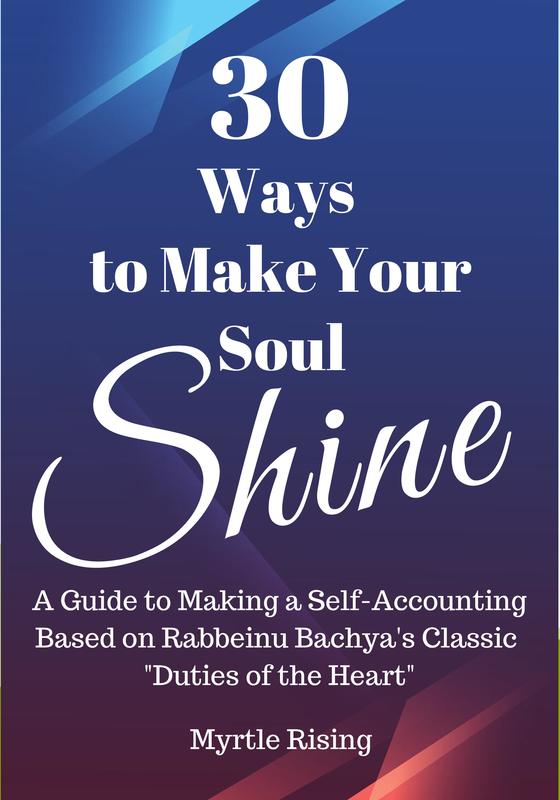
And the answer is in the Chovos Halevavos [Duties of the Heart], in Shaar Habechina [Gate of Examination].

He says that gratitude to Hashem, that’s the most fundamental of all chiyuvim [obligations]. That’s what it says, Tov l'hodos laHashem – It’s good to say thank You to Hashem (Tehillim 92:2).

That’s the main function of our lives!

​Unfortunately, it’s ignored by many in the frum world, but the most important method of achieving shleimus [spiritual wholeness] is through expression of our gratitude to Hashem.
In the zechus of Rav Avigdor Miller, plus many other rabbis and rebbetzins, and the people who work to spread this idea, I see many in the frum world no longer ignore the importance of thanking Hashem.

People even speak of it frequently.

This should hearten and encourage us to keep spreading Torah messages.

It shows that speaking and publicizing Torah-true ideas WORKS.

Eventually, what was uncommon becomes common.

​Here's more:
But the greatest of all the benefits that Hashem bestowed upon us, which means the one that requires the greatest amount of gratitude, is the Torah and the nissim [miracles].

Now, the nissim, how that comes in here, is a question that has been explained before and I won’t take the time now to repeat it.

But the Torah is the number one of the two.

That is the greatest of all the chasdei [loving-kindnesses of] Hashem, the one that requires from us the greatest attitude of gratitude.

The greatest outpouring of emotion, of appreciation, is reserved for the Torah.

Now, everyone here is of course loyal to the Torah; we try to practice, to keep everything.

But we’re learning now a different subject.

We’re not talking now about doing the mitzvos, or even learning the Torah; we’re talking about the great joy of possessing the Torah.

​It’s the greatest duty of every man and woman, boy and girl, to feel as keenly as possible the happiness of having the Torah!
The rest of it continues in a witty, engaging, and inspiring way how to do that (and more!).

May Hashem please grant everyone an elevated Shavuot with delicious and chag-enhancing food for both the body and soul.
Picture

Enhance Your Shavuot with Links to Insights on Shavuot & Megillat Ruth

17/5/2026

 
For Shavuot, please see the booklet of Bilvavi shiurim, plus Q&A, and special inspiration for women:
Bilvavi Shavuos Talks

And also on the 48 Ways to acquire Torah:
Bilvavi: The.48.Ways

And on the month of Sivan:
Bilvavi Insights for the Hebrew Month of Sivan & for Shavuot

And here are past posts on Megillat Ruth and Shavuot:
  • Falling in Love with Hashem & His Torah All Over Again: Rav Avigdor Miller on Shavuot
  • The Phenomenal Importance of Mussaf on Shavuot & What It Does for Your Soul
  • Megillat Ruth: What Naomi & Ruth Teach Us about Self-Transformation, Teshuvah, Mistakes, Rebuke, Criticism, and How It's Okay to Not be Perfect
  • When Feeling Heavy & Struggling Means You're on the Right Path
  • Why was Ruth's Conversion to Judaism So Monumental? What Does Conversion Actually Accomplish? And Why is It So Vitally Necessary for a Conversion to be Absolutely Kosher & Sincere?
  • ​Difficulty in Serving Hashem? Everything Going Wrong? Feeling Heavy & Lazy About It All? Then You're On The Right Track! Here's Why...
Picture

Winning the Battles against Ourselves & the Stars: The Kli Yakar on Pesach

6/4/2026

 
And it shall be when your son will ask you tomorrow, "What is this?"....
(Shemot 13:14)
Throughout Pesach, we read from Parshat Bo.
​
So the Kli Yakar uses that parsha to provide illuminating insights into Bnei Yisrael's first Pesach, the parable of the Four Sons, and what it all means for us and how we can apply these lessons to our own lives. 
וְהָיָה כִּי יִשְׁאָלְךָ בִנְךָ מָחָר לֵאמֹר מַה זֹּאת
(The Kli Yakar's insight into the Son Who Does Not Know to Ask appears here.)

The Universal Lesson of the Wise Son ​

Regarding the Wise Son, the Hagadah says the following:
What does the wise son say?
​
"What are the testimonials, statutes and laws Hashem our God commanded you?"
​
You should tell him about the laws of Pesach, that one may eat no dessert after eating the Pesach offering. 
The Kli Yakar notes that the questions and answers of the Wise Son are mentioned in the Torah itself:
And you shall tell your son on that day, saying, "Because of this, the Lord did [this] for me when I went out of Egypt." (Shemot 13:8)

If your son asks you tomorrow to come, saying, "What are the testimonies, the statutes, and the ordinances, which the Lord our God has commanded you?" (Devarim 6:20)

​You shall say to your son, "We were slaves to Pharaoh in Egypt, and the Lord took us out of Egypt with a strong hand. (Devarim 6:21)
The Kli Yakar sees the order of the answer as a universal lesson on how to attain spiritual perfection:
....the Wise [Son] shall learn the order of the acquirement of perfection.

And this is the order:


[1] From the beginning, a person must bring his physical essence into the crucible of affliction [kur ha'oni] to refine and purify it from its "rust."
[As symbolized by the bitter herb – MR].

[2] And through this, he will come to submission before his Creator.
[This is symbolized by the matzah, as we'll see below – MR]

[3] And through this submission, he will come to a recognition of Hashem's Existence.
[This is symbolized by the Pesach Offering, which is symbolized today by the afikomen – MR]

​For Hashem's bringing Yisrael into the crucible of affliction of Egypt was in order to scour their physical essence to bring them to submission.

And from within that state, they ended up coming to the recognition of Hashem's Existence.


​And the first two are like laying the groundwork to come to the third idea, which leads to knowledge of His Existence because this is the most desirable and the direct purpose above all others:

To bring them to emuna in the Blessed One.
Along these lines, why is it so important that the Pesach Offering be the last thing one eats on the Seder night?

Why is it so crucial that the taste of the Pesach Offering linger in one's mouth, and not the bitter herb or the matzah?

​The Kli Yakar answers:
The Pesach Offering is the primary objective and the desired final purpose, elicited by the eating of the matzah and the bitter herb:

​That is to say, the Pesach Offering signifies emuna in Hashem Yitbarach.
We'll see exactly why below.

The Pesach Offering vs. The Entire Zodiac

The Kli Yakar explains the tremendous power behind the Pesach Offering:
The Pesach Offering [Zevichat HaPesach, AKA "the Pascal Lamb," AKA "HaPesach"] bears witness that Hashem's Testimony is Faithful in that Hashem Yitbarach rules over the astrological system, even over the sign of Aries [the Ram], which is the first-born and leader of all the Zodiac [according to the opinion that Nissan, whose sign is Aries, is actually the first month of the Jewish year] and certainly over the rest of the Zodiac.

For the mitzvah of the Pesach offering is as Rashi interprets the verse (Shemot 12:3) "And I shall pass over you [ וּפָסַחְתִּי עֲלֵכֶם ]" as: "I shall be compassionate."

He means to say that now you will go out from the authority of the Zodiac, whose functions are compelled and innate, and doesn't have within them the power to carry out any function that derives from compassion [chemlah], mercy [chaninah], and charitableness [tzedakah].

And you shall enter under the Wings of the Shechinah.....

Through this, we will go out from under the hand of the astrological system and we will stand before Hashem Elokim to enter into the shade of His Wings.
Just like in the other parts of Parshat Bo, we see once again that our deeds and inner spiritual work influence the stars, and not the other way around.

​Once we whole-heartedly choose to enter under God's Protection and realize He rules over all and there is no force greater than Him – we truly have nothing to fear.
 
Submission feels counter-intuitive to most people.

But in actuality, submitting to Hashem remains the most liberating and powerful thing a person can do.
Picture
ARIES by Till Credner @www.allthesky.com

The Symbolism of Matzah and Chametz ​

As is well-known, matzah represents humility.

The pre-Pesach drive to annihilate, throw out, and nullify all chametz (leavening and leavened products) represents the goal of doing the same to our Yetzer Hara, and especially to any unearned sense of superiority and haughty pride.

​Chametz makes the otherwise flat dough rise just as haughtiness makes us rise in our own estimation:
....the dough of the matzah is "limited;" it does not rise.

​Similarly, matzah is a sign of freedom because in the merit of our submission to Hashem, our fathers were redeemed from Egypt.

As it is written (Devarim 7:7):

"Not because of your being greater than all the nations did Hashem desire you – but because you were the smallest."
And here's what the Kli Yakar has to say about chametz:
Chametz is sentenced to burning because anyone who is haughty is judged by fire as seen in the Yalkut (Tzav 480) regarding the verse:

​"The Olah [Burnt Offering] that burns...." (VaYikrah 6:2) because the nature of fire is to rise upward. Likewise, one who rises upward [i.e., become haughty or prideful] is judged by it.
May we all merit to be truly liberated this Pesach.
Picture
Rabbi Shlomo Ephraim of Luntschitz (1550-1619) lived in Bohemia (which is today Poland and Czechoslovakia). He served as rabbi and dayan and wrote several books, the most well-known being his commentary on the Chumash known as the Kli Yakar.
Although I did borrow a couple of terms here and there from Rabbi Elihu Levine's translation, this is primarily my own translation and any errors are also mine.
 

For a wonderful rendering of the Kli Yakar into English on Parshat Bo, including helpful footnotes, please see Rabbi Elihu Levine's translation.  

​Or this newer translation: 
Kli Yakar Shemos Volume 1 - Parshiyos Shemos - Yisro - Zichron Avrohom Edition.

The Silent Son

1/4/2026

 
The Kli Yakar’s elucidation on the Passover Hagadah’s Son Who Does Not Know to Ask was so incredibly instructive and so characteristic of our generation, I made it into its own separate post. (From Parshat Bo 12:26)
For those who know Hebrew, I occasionally included the original Hebrew phrase for added clarity.
​Enjoy!

Picture
Of the Four Sons in the Pesach Haggadah, one is deemed "the Son Who Does Not Know To Ask."

(The other Sons are: the Wise Son, the Wicked Son, and the Simple Son.) 

Because he is not even aware that he needs to ask (or because he does not know how), he doesn’t say a word.

He remains silent.

Fascinatingly, the Kli Yakar does not take at face value the silence of the Son Who Does Not Know To Ask.

Intriguingly, the Kli Yakar asks the Abarbanel’s question: 

"How can it say that the Son is silent because he doesn’t even know to ask?

​Perhaps he is silent because he is completely wicked (rasha gamur) and doesn’t even want to speak about this mitzvah because it so despised (bazuyah) in his eyes?"

Then the Kli Yakar points out that only Hashem can really know a person’s heart.
So how can we know the real reason why someone is silent?

Needless to say, the Silent Son tragically describes the vast majority of Jews today –across all backgrounds and categories.

Some truly don’t know to ask. For one reason or another, they are literally unable to ask.

And some just aren’t interested because they despise the Torah values that don’t fit in with their liberal secular mentality or their unknowingly Esav mindset (i.e. addiction to materialism and wanting to be in control and attributing success solely to one’s own efforts rather than to Hashem).

So how should we handle this type when we can’t truly know what’s going on underneath the surface?

Start Off Soft 'n' Gentle

The Kli Yakar advises:
In order to find your way out of this confusion, go and say to him, "It is because of this that Hashem did for me in my exodus from Egypt."

​Then, no matter what, you have fulfilled your obligation.

​Because if he is wicked at heart (rasha b’lev), you have set his teeth on edge….and if he is not wicked, and simply does not know how to ask, then say to him this same verse…. because if he had been there, he certainly would have occupied himself with this holy service (avodah) [and merited Redemption].

Then the Kli Yakar explains how to speak to the Silent Son.

He notes that the word used – l’hagid (to tell) – sometimes indicates gentle speech, but other times, it indicates words “as hard as sinews.”

The Kli Yakar states that if such a person truly doesn’t know to ask, then you should “draw him to the service of Hashem” by using “gentle words that attract the heart of a person.”

If the First Method Doesn't Work, Then Go for the Double-Whammy

Later, the Kli Yakar goes into more detail:
And the Torah’s opinion is to first test the Wicked Son to see whether it’s possible draw him into the service of Hashem, using gentle words (devarim rakim)….

​And if he “stiffens his neck” and will not listen to “a voice of whispers—kol melachashim” (indicating a gentle tone in addition to soft, gentle words), then….feed him words as harsh as sinews, which will set his teeth on edge and tell him:
​
"For the sake of this [the worship of Hashem], Hashem did for me"— for me and not for him.
But either way you deal with a Wicked (or secretly wicked) Son, the Kli Yakar reminds us:
The Haggadah says, "Do not be intimidated by the Wicked Son."
And then he emphasizes once again:
"The tipping point is (ikar hadiyuk talui) whether he is a servant of Hashem OR whether he is not servant of His."  

In other words, it comes down to the individual’s basic ratzon – his ultimate desire.

This represents incredible insight and profound advice.
 
In summary, the Kli Yakar is saying that you should give the Silent Son the benefit of the doubt and use “devarim rakim – soft (or gentle) words” and a soft tone of voice.

And if he truly doesn’t know, then this approach will draw him closer.

​But if he is silent out of apathy and loathing, then he'll experience these soft and gentle words "hard as sinews, which set a person’s teeth on edge."

And that is how you can know exactly who you are dealing with.

Needless to say, this is EXACTLY what is going on in the world today.

Bringing It All Home

Now I’d like to make one final point:

There weren’t really secular Jews in the Kli Yakar’s time – well, very few, anyway.

The Silent Sons of the Kli Yakar’s time would have seemed pretty frum by our standards.

So if I understand this commentary correctly, any Jew – whether secular or frum – could either be silent out of innocent ignorance and the inability to even ask OR silent out of apathy and loathing.

How we respond to soft, gentle words of beautiful Truth reveals everything.

Needless to say, anyone can have a kneejerk hostile reaction upon hearing the Truth for the first time. 

That is actually pretty normal.

There are also people who argue as a way at getting at the truth.

That is also perfectly acceptable.

​But there are definitely people who reject and rebuff such words; they even physically turn away and refuse to listen, and do so consistently, whether they are outwardly frum or not.


Now, taking this one more step further, I couldn’t help thinking about how would I know which Son I am?

After all, being honest with yourself is one of the toughest challenges.

So I want to say that even if you suspect that you might be a seethingly Silent Son (which is basically a Secret Wicked Son), you can always switch over from a seething Silence to a receptive Silence.
 
No physical action needs to be taken.

The switch is all in your mind.

If you'd like the Kli Yakar’s entire commentary on the Four Sons as found in Parshat Bo, Shemot I (Shemot, Va’era, Bo, Beshelach) is available in English with a fantastically lucid and well-researched translation by Elihu Levine.
However, the above is mostly my own translation and therefore, any errors are also mine.
Rabbi Shlomo Ephraim of Luntschitz (1550-1619) lived in Bohemia (which is today Poland and Czechoslovakia). He served as rabbi and dayan and wrote several books, the most well-known being his commentary on the Chumash known as the Kli Yakar. 

How Our Current Situation is Reflected in the Haftarah for Pesach

31/3/2026

 
This post remains an oldie but goodie – and has been updated.

It's amazing how it applies to our changing situation year after year.

And particularly with regard to the Erev Rav mentioned below, it's just as pertinent today as ever. Please also make sure to see the comments for added valuable insights.

In the Pesach Haftarahs, it's possible to see our current situation reflected in our current situation, either what is happening or what we should be doing.

The First Day of Pesach

On the first day of Pesach, we read Joshua 3:5-7; 5:2:15; 6:1; 6:27. (HERE is a summary.)

It refers to Am Yisrael leaving the regular world and entering Eretz Yisrael.

However, it's not totally theirs yet.

And it signifies the end of our manna.

Taking this millennia later to our own times: A lot of people coming to Eretz Yisrael, including (or especially) those coming from luxury backgrounds, try to take that luxury with them.

In fact, nearly everyone initially does this to one degree or another. It's natural.

And even as we struggle with this to a lesser degree, some of us came to Eretz Yisrael davka to embrace a less materialistic lifestyle – and so we embrace the struggle (in addition to sometimes feeling frustrated).

We decided to make do with "the grain of the land" instead of the delectable and easy manna.

Just like Am Yisrael back then. 

Before they entered the Holy Land, Bnei Yisrael either got circumcised (for those who didn't before) or improved their original circumcision.

And that's also happening for many Jews now: Many are "circumcising" their hearts by either keeping Shabbat or other mitzvot for the first time or, if they're already mitzvah-observant, improving on what they're already doing.

And if they aren't, then reading the Haftarah gives them some pretty good advice:

​Get real with your Yiddishkeit! Excise that orlah!

As usual, the Erev Rav still sabotaged Am Yisrael, according to Rashi on Yehoshua 5:9.

For example, they stressed or taunted Am Yisrael about being taken out with the star Ra'ah, which also symbolizes blood. (The Kli Yakar explains that HERE.)

Based on its blood association, the Egyptian astrologers predicted disaster for Am Yisrael under this star, made this prediction public – and everyone started ridiculing Am Yisrael for jumping from the frying pan and into the fire.

The Egyptians started it, and the Erev Rav continued it. (Just like nowadays.)

What they didn't know was that the blood seen by Egyptian astrologers was the blood of brit milah. 

So circumcising (or improving the circumcision) shut up all the leitzim (mockers & detractors) – including those within Am Yisrael's ranks.

This remains symbolic of what's happening today.

​The powerful & progressive surrounding culture misinterprets events & science.

They mock authentic Torah Judaism & the Jews who adhere to it.

And the Erev Rav (who seem just like any other Jew) follow and imitate the biggest bully – instead of Hashem.

So, yes, the Haftarah reflects today's world pretty accurately.

And because of the mass circumcision, many people in Am Yisrael aren't feeling so good in Chapter 5 of Yehoshua. Many also died before.

​And so the whole Am is waiting in solitude for their fellows to recover.

Kind of like now.

And finally, in Yehoshua 6:1, we have a city shut down.

Yericho is "sogeret u'misugeret – shut and barred." Yericho is closed from within and from without, according to the commentaries.

In other words, Yericho was in bidud – quarantine.

That was true during covid. It's also true now – especially for those shut and barred within their protected space during a siren.

The Second Day of Pesach

​The haftarah for the second day of Pesach continues HERE with major teshuvah going on in Melachim II:23 under the reign of King Yoshiyahu.

In this Haftarah, people burn all their addictive non-kosher hi-tech gadgets and rid their society of all the self-proclaimed leaders leading them even deeper into sin and confusion, and turn to their real talmidei chachamim instead.


Oops!

I mean that they burn all their idolatrous addictive items and get rid of the pagan priests who offered incense to Baal & led the people astray.


The Jews also rediscover the Torah and experience a spiritual re-awakening.

(In these past couple of weeks, many people decided to take on shemirat Shabbat, at least for the past two Shabbats, as mentioned here:
When Chametz on Pesach became the Most Powerful Weapon of Terror.)

Hopefully, with Jews in Eretz Yisrael preparing for Shabbat on the second day of Pesach & Jews outside of Eretz Yisrael continuing to celebrate the chag as they go into Shabbat, there is some healthy spirituality going on (even if things are also understandably stressful).

And King Yoshiyahu resembles many Jews today in that, going back a few generations, he comes from good people. But his grandfather Menashe and his father Amon committed terrible transgressions.

Yet King Yoshiyahu got in touch with his real self, his neshamah, and reached back past his father and grandfather to connect with his real roots.

He made himself great and managed to influence Am Yisrael too.

And then on Shabbat Chol HaMoed, the dry bones of Sefer Yechezkel come to life (during most years, when there is a Shabbat during Chol HaMoed).

May Hashem please bring the Geula b'rachamim and do so speedily.

What is the #1 Way to Facilitate a Kosher Pesach & Thus, a Kosher Year?

29/3/2026

 
On page 220 of the first volume of Words of Faith, we encounter Rav Levi Yitzchak Bender’s Talk #17: Pe-sach — Only Tefillah!

​"Pesach" can be split into 2 words: 

Pe: peh – mouth
Sach: sach – to channel in another direction (when spelled with a samech) or to converse (when spelled with the letter sin)

This double-meaning implies that Pesach contains a deeper meaning, a meaning connected to the mouth. 

By channeling the activity of one's mouth in the right direction – eating more spiritually (avoiding chametz, in addition to keeping kosher) and speaking with more care and spiritual direction – we connect to the real purpose of Pesach.

​
So we see from this that Pesach is about a personal & verbal relationship with Hashem.
 
This makes sense because in the Torah's whole saga of slavery and redemption, Am Yisrael roused Divine Mercy whenever they cried out to Hashem.
 
Rav Bender recalls the Arizal’s promise that whoever is careful from a little bit of chametz on Pesach is guaranteed not to sin the whole year.
 
And Rav Bender stresses that if we really want to achieve this, it can only happen through tefillah.
 
There are 2 advantages to doing this:
​
  • Via tefillah, we are saved from mistakes – unintentional chametz. (For example, after davening to be saved from chametz, you find yourself cleaning something you’d overlooked in years past and seeing chametz or possible chametz.)
 
  • You merit to be saved from chametz by attaining it through the highest means possible: tefillah.
 
Like Elul, Nissan is a month of teshuvah.

  • Elul is teshuvah from reverence. 
 
  • Nissan is teshuvah from love.
 
I’m not the only one to notice that a lot of kapparot (atonements) happen during Nissan leading up to Pesach.
 
Sometimes, it’s hard to see them because they look like part of Pesach stress.

But closer introspection often reveals something similar to what happens to you in Elul.
 

The Elul-Nissan Connection

Rav Bender quotes Rebbe Baruch of Medzibuz, an uncle of Rebbe Nachman of Breslov, by comparing Elul preparations to Nissan preparations.
 
In Elul & the 10 Days of Repentance, Jews are busy with fasting and repentance.
 
In Nissan, says Rebbe Baruch, Jews are “busy with preparing geese and fat ducks, fish, and eggs for the sake of the festive banquet” (meaning, Leil HaSeder).
 
If only we would switch the order, says Rebbe Baruch, and do in Nissan what we do in Elul, and repent and pray to be saved from a little bit of chametz on Pesach, then we would be sure not to sin the entire year, and THEN we wouldn’t need the fasts and mortification of Elul & the 10 Days of Repentance because we never sinned. (Yay!)
 
Rav Bender emphasizes the importance of tefillah in Nissan, especially in the days leading up to Pesach when it is hardest to find extra time for prayer.
 
“All beginnings are difficult,” he acknowledges as he encourages us to do our best.
 
You can also talk to Hashem while you’re scrubbing or sweeping or making charoset.
 
You can thank Hashem and force yourself to smile at least for a millisecond even when you’re stressed out.

Let's finish off with Rav Bender's final words on the topic on page 223:
Adar and Nissan are two months that a person has to make a special soul-accounting.
...

There are many types of work to do for Pesach. To get rid of chametz and other important work for the holiday.

​But make sure to also give tefillah an honorable spot.

​Without this, it is not only half of something – if it is lacking tefillah, it is lacking the main thing.

How Would the World be with No Moon?

13/3/2026

 
Picture
Seeing as Rosh Chodesh Nissan (the first day of the Hebrew month of Nissan) is on the horizon, with this Shabbat as Shabbat HaChodesh and the Haftarah of Parshat HaChodesh, it seems like a good time to repost this updated post regarding the importance of the Moon.

The Moon plays a major role in Judaism, from determining months and holidays to its necessity for the mitzvah of Birkat HaLevanah (Blessing of the Moon).

The Moon also contains profound spiritual and kabbalistic significance.

But in this post, we'll focus on just the scientific necessity for the Moon.

What would our world be like without the Moon?


​Monstrous Tidal Waves

Everyone knows that the Moon affects tides.

The Sun does, too, but to a lesser extent.

The reason why the Earth bulges out at the equator is due to its pull on the Earth.

This lunar pull also keeps the oceans in check. If the Moon suddenly disappeared, the oceans would flood into every continent, completely changing the map of the world.

In fact, the movement of the newly liberated oceans to meet each other would cause 59-foot (the height of a 6-story building) tsunamis all over pushed from behind by the force of the entire ocean.

Every morning, Jews say the blessing "Baruch...rokah ha'aretz al hamayim -- Blessed be...Who spreads the land over the water" to show appreciation for the fact that the water usually stops at the seashore. (Well, that's one of the meanings of the blessing, anyway.)

A major reason why it doesn't encroach further is because of the reining-in effect of the Moon as described above.

​Heat Loss

​Without the Moon, the ocean currents would slow down or stop, preventing the transfer of heat around the world.

​The Earth as a Drunken Dreidel

​The Moon has a stabilizing effect on the Earth.

As the Earth spins on its axis, it spins at a tilt that wavers between 22-25 degrees.

Actually, for anyone watching the sunrise, you'll notice the sun rises in one place one morning and then a completely different place a week later.

(I've tracked this a bit.)

While the location of sunrise changes according to the seasons, the sun moves continuously in the same direction in that case, rather than moving back and forth. 

I looked this up and discovered that scientists indeed validate this wobble: a 45-degree shift since the early 2000s.

But because they don't know what's causing it, they decided to make up stuff.

For example, a news outlet I like to call Bleary British Clowns opines that global warming is causing the wobble because the heat evaporated moisture from the land masses, which redeposited in the oceans, and this redistribution causes the entire planet to swish around.

I'm not joking. They actually wrote that. I'm not linking to it, but you can look it up if you enjoy reading drivel. It is pretty amusing sometimes.

​Anyway, without the Moon, the wobble would be even worse.

Without the Moon, the Earth would swing around like a drunken dreidel, veering from zero degrees (no tilt at all, standing straight up) to an 85-degrees tilt (lying on its side, which would chill the upper hemisphere and shine the Sun directly on the South Pole and presumably cause some major warming and melting down there, turning Antarctica into a beach or a desert.

​Good-Bye Seasons

​Due to the crazy wobble described above, seasons would just come and go randomly.

Antarctica would sometimes be the frozen wasteland we know today and other times be as hot as the tropics.

Hot areas of the world would sometimes freeze and cold areas would sometimes bake.

​Rotation on Steroids

Without the Moon, the Earth would spin much faster.

The Moon acts as a gentle restraint on the Earth (perhaps yet another reason why the Moon is likened to a woman in Jewish allegories and Hebrew grammar).

If the Earth spun faster, this would shorten the days to 6-12 hours, which would increase our calendar year to 1000 days.

​It would also increase the strength of hurricanes, making Category 5 storms the norm.

Of course, there are other results you likely thought of: darker nights, the absence of eclipses, nearly non-existent tides, no asteroid blocker to protect Earth, and so on.

The Torah Blueprint

Our Sages often emphasize that the Torah is a blueprint for the world. Before Hashem created our world, He created the Torah, then structured the world accordingly.

As you can see from the above, without the Moon, not only would we face the challenge of physical survival, but we wouldn't be able to keep many aspects of the Torah relating to time.

Of course, the monster tidal waves wouldn't occur if the Moon never existed, but only if it suddenly disappeared.

​However, a steady tilt, predictable seasons, and the present calendar could never have developed without the Moon. (Not to mention how difficult life would be under such conditions.)

So whether we're grateful that Hashem created a Moon (at the perfect size and the perfect distance!) or we're grateful that Hashem allows us to keep the Moon, may you enjoy a very good month and rejoice in the fact that we even have such a thing as a month!

Chodesh Tov! May this Adar see the Redemption in a sweet way.
Picture

Rav Avigdor Miller on Jews Falling in Love with Ourselves in Parshat Miketz

18/12/2025

 
Let's take a look at an earlier booklet of divrei Torah from Rav Avigdor Miller on Parshas Mikeitz – Pride of Israel.

The booklet starts off with Rav Miller delving into the real story of Chanukah.

And the ugly truth about the story?

Our real enemies manifested as the same persecutors who joined the Reform Movement (and got the Malbim imprisoned on false charges) or the Communist Yevsektsia – both of whom made trouble for myriads of dedicated Jews.

The Yevsektsia especially betrayed good and innocent Jews to the non-Jewish authorities.

Today, we suffer from terrorist-sympathizing Leftists (among others).

In the time of the original Chanukah, the JINO troublemakers were known as mityavnim – those who became Greek – the Hellenizers.

Through their vocations (like tax collecting), they came in contact with the Greek elite, and then these mityavnim clawed their way up to become upper-class elitists, who scorned Torah ideals and strove to emulate the ideals of their surrounding society.

Yes, this distressing dynamic has repeated itself several times, particularly in the past 200 years.

​And Rav Miller emphasizes how all the tragedy and challenge of Chanukah started with Jews who fell in love with their surrounding non-Jewish society (including the aspects diametrically opposed by the Torah), and lost their heads.

Then he segues into the story of a Jew who could have been swallowed up by his non-Jewish surrounding society, but didn't allow that to happen:

Yosef Hatzaddik (the star of Parshat Miketz).​

When "Nice!" Means "The End"

Upon his release from lengthy imprisonment underground, Pharaoh transformed Yosef Hatzaddik into one of the most powerful people in Egypt. 

Back then, Egypt stood out as a vast & powerful empire, plus it led the world in ancient technology.

And Yosef Hatzaddik was second only to Pharaoh at the head of this incredible empire.

From both Egyptian royalty and the masses, Yosef received accolades, honor, glory, and all the material benefits available at that time.

Yet he remained Yosef ben Yaakov Avinu and Rachel Imeinu.

In contrast, Rav Miller notes how davka the allure of a nice non-Jewish culture often destroys the Jewish people – via assimilation.

And assimilation starts in the head long before it leads to intermarriage and full absorption into the surrounding culture.

He gives examples from America and from Germany.

​Rav Miller recalls his visit to Germany (a country he needed to travel through to and from his yeshivah in Slabodka, Lithuania) just before yemach shemo took over in 1933.

Despite Rav Miller's identifiably Jewish appearance, an older German professor rushed over to help the young Rav Miller lift his suitcase on the train.

Such humility and a sincere desire to do chessed! What could go wrong?

Rav Miller recalls a country with no violence – a country that was so clean and law-abiding, no one even littered in the streets. A Jew could get an education, even a doctorate (as one former yeshivah bachur did, recalls Rav Miller).

Jews loved visiting pre-WWII Germany, a bastion of modernity, progress, and culture.

And look what happened in the end.

Partway through the booklet, Rav Miller exhorts:
“Don’t make any mistake about it,” Hashem was telling us. “It’s all shav v’sheker!”

Like the medrash says: Eisav – what does Eisav mean?

הוי שוא – How false he is!

​How false is the gentile culture! How false are their ideals and attitudes!

How false they themselves are!

And not only Germany – everywhere! 

No Inferiority Complex?

Rav Miller reminds us how many Jews got lost in America, Canada, England, and France.

Where are the Jews who came to American in the mid-1800s? Why don't we hear about them?

Why are so many of the Jews we know today only 2nd- or 3rd-generation Americans?

Vast amounts of Jews came to America over a century ago. Where are they now? Where are their descendants?

​Rav Miller explains that traditionally, Jews never suffered from an inferiority complex.

Sure, they felt fearful of their non-Jewish countrymen.

But Jews didn't go around rabble-rousing or demonstrating and all that. They felt secure in their lofty morality and Torah ideals and their relationship with Hashem.

Jews only knew of rabble-rousing when the rabble came pouring into their neighborhoods to make violent trouble.

​So the Jews experienced fear, but not feelings of inferiority.

Why Do Some Jews Hate Themselves More Than Non-Jews Hate Them?

But when Jews enter into non-Jewish society, they read and hear what that society thinks about them.

And suddenly, the Jew feels bad about himself.

Rav Miller explains why a Jew sometimes hates himself more than non-Jews hate him:

Non-Jews, even those who don't really like Jews, have other things to do. They have other things to think about.

But a Jew influenced by non-Jewish culture?

​Rav Miller explains:
But the Jew who has now learned gentile attitudes is living with himself always – he can’t escape it and so he learns to despise himself, to hate his own people. 

​It's so true.

For example, why is covering hair such a big nisayon for many Jewish women today?

Why is tsniyut (dressing & behaving with dignity) being bulldozed, with short skirts entering even the most insular communities (though not all of them, baruch Hashem)?

Who says that long clothing and wrapping up your hair is oppressive?

In many cultures throughout history, women covered their hair.

In fact, you can see photos from only 60 years ago, in which even the most fashionable gentile women in America wore a triangular scarf tied around her hair a tied in the front, under her chin (just like the pious Jewish women in pre-WWII Europe).

Jacquelin Kennedy (President JFK's wife), Queen Elizabeth, Grace Kelly (who later became Princess Grace when she married Monaco's ruler), and many more – they all wore hair scarves tied in front under their chin.
Picture
Queen Elizabeth wearing a headscarf tied under her chin while horseback-riding with President Ronald Reagan in 1982. By Series: Reagan White House Photographs, 1/20/1981 - 1/20/1989Collection: White House Photographic Collection, 1/20/1981 - 1/20/1989 - https://catalog.archives.gov/id/75856835, Public Domain, Link
Sure, they did so to protect their hair from the sun, not out of modesty. But the fact remains that they took a very modest look (often, the scarf covered most or all of their hair) and made it chic.

Yet what frum woman today, even among the scarf-wearers, would tie her hair scarf under her chin? Most people would consider that too weird and backwards – even though it would cover one's hair much more thoroughly and neatly. 

And with the exception of primitive cultures, women – especially important women – generally dressed tsniusly.

Some misguided people get so worked up about women wearing clothes that cover up their body, but what about men who do the same?

No one cares.

For example, today, even the most modestly dressed frum woman does not wear as many layers that chassidish men wear.

​And they always cover at least their elbows, and often wear sleeves down to their wrists.

Some miseducated women go on diatribes against sheitels or hair-scarves, or against modest clothing in general.

But what about the chassidish men who wear a velvet kippah AND a fur shtreimel in the middle of summer in suffocating humidity of Miami or New York or the desert of Arad (which sometimes reaches over 100°F in the summer; they must walk in that heat to shul on Shabbos)? 

Who's head-covering is more oppressive and more uncomfortable?

Yet who's complaining?

This all reflects attitudes from non-Jewish society.

Look at how even the most ultra-Orthodox Jews need to tiptoe around toeva, making sure that even in their rejection of the worst parts of it, they don't sound too judgmental.

If you journey throughout history, someone somewhere always nitpicks at Judaism for one reason or another:

The polytheist cultures didn't like the exclusionism of One God.

Ancient Egyptians, who worshiped sheep, didn't like the Jewish practices of sheep-herding and dinners of grilled lamb chops. 

One Roman elitist criticized Jews for being too nice to slaves.

Greeks considered Jewish tsniyut (for both men & women) odd & backwards. They wanted to celebrate the human body by putting it on display. They took this so far, they considered brit milah a type of mutilation.

In fact, some Greek thinkers even considered the lack of idols and human statues in the Beit Hamikdash as "barbaric" and as displaying a hatred of fellow humans.

Weird, right?

Later, Notzrim despise Jews for killing their "god." (Yeah, talk about irrational contradictions.)

In junior high in the 1980s, I was confronted with this accusation during Home Ec class in 7th grade. It was terrifying because I knew that no one would be on my side because regardless of the actual religiosity of them or their families, most of my classmates attended church and maintained at least a superficial belief in the basics.

So when tough-girl blonde blue-eyed Tina insisted, "My pastor says that the Jews killed Jesus, not the Romans!" – I felt it was me against over 20 others.

Fortunately, a black friend of mine named Valerie came to my defense, passionately asserting her pastor's belief that the fault indeed lay with the Romans. 

Phew!

​Anyway, the list goes on.

​Rav Miller notes that even observant Jews look at fellow frummies through the eyes of non-Jewish values.

They don't see all the mitzvot being performed in frum homes; they see only the aspects criticized by their surrounding society.

But back to Yosef Hatzaddik...

Self-Love, Chanukah-Style

So even though he'd been immersed for years in a society that worshipped and protected sheep, Yosef Hatzaddik never found lamb chops repulsive.

He also kept his brothers away from Egyptian influence even when they came to Egypt.

​Yosef Hatzaddik loved Hashem. He loved Am Yisrael – even when it was hardly an Am.

And that's the real message in Chanukah: 
And Chanukah tells us that great lesson, that beauty is only by us!

We always have to be on guard not to look for beauty and culture and perfection outside of our people.

​You have to fall in love with the Am Yisroel – that’s what Chanukah is telling us, that we have to fall in love with ourselves

Rav Miller's Great Passion

This always stood out as one of Rav Miller's big passions:

He kept praising frum Jews.

Yes, we all know there are bad ones.

He knew it too; he mentioned them and criticized them.

Frankly, I think this was his way of preventing another Shoah.

That's why he remained so passionate about seeing fellow frummies in a positive light.

He vehemently opposed putting down other groups that were uncompromisingly shomer Torah & mitzvot, even when he didn't personally subscribe to their hashkafah.

He only praised them no matter what.

He wanted Jews to feel bursting with love for Hashem and each other and the Torah's mitzvot.

​He wanted Jews to serve Hashem with happy hearts.

That prevents Jew-hatred more than anything else: serving Hashem with a happy heart and loving our fellow Jews.

This is what hastens and sweetens the Geula.

Seeing ourselves, our Torah, and our God through positive eyes remains the secret to Jewish survival.

Credit for all quotes goes to the wonderful Toras Avigdor.
<<Previous
    Privacy Policy


    Feedburner subscription no longer in operation. Sorry!

    Myrtle Rising

    I'm a middle-aged housewife and mother in Eretz Yisrael who likes to read and write a lot.


    Picture
    Sample Chapters

    Categories

    All
    Aliyah
    Anti Jewish Bigotry
    Astronomy
    Bilvavi
    Book Review
    Books
    Chagim/Holidays
    Chinuch
    Coronavirus
    Dictionaries
    Emuna
    Eretz Yisrael
    Erev Rav
    Gender
    Hitbodedut
    "If The Torah..."
    Jewish Astrology
    Kav Hayashar
    Kli Yakar
    Lashon Hara
    Love
    Me'am Loez
    Minchat Yehudah
    Mishlei/Proverbs
    Netivot Shalom
    Parenting
    Parsha
    Pele Yoetz
    Perek Shira
    Pesach
    Politics
    Prayer
    Purim
    Rav Avigdor Miller
    Rav L.Y. Bender
    Recipes
    "Regular" Jews
    Rosh Hashanah
    Society
    Sukkot
    Tammuz
    Technology
    Tehillim/Psalms
    Teshuvah
    The Lost Princess
    Tisha B'Av
    USA Scary Direction
    Women
    Yom Kippur

    Jewish Interest

    Daf Yomi Review
    Esser Agaroth
    Going...Habayitah
    Halacha Q&A
    ​
    Hava haAharona
    ​
    Jewish Home News
    Mevakesh Lev

    Miriam Adahan
    MKY Moments
    My Perspective

    Shirat Devorah
    ​Sultan Knish
    Tomer Devorah
    Toras Avigdor
    Tznius Blog

    Yeranen Yaakov

    Archives

    August 2026
    July 2026
    June 2026
    May 2026
    April 2026
    March 2026
    February 2026
    January 2026
    December 2025
    November 2025
    October 2025
    September 2025
    August 2025
    July 2025
    June 2025
    May 2025
    April 2025
    March 2025
    February 2025
    January 2025
    December 2024
    November 2024
    October 2024
    September 2024
    August 2024
    July 2024
    June 2024
    May 2024
    April 2024
    March 2024
    February 2024
    January 2024
    December 2023
    November 2023
    October 2023
    September 2023
    August 2023
    July 2023
    May 2023
    April 2023
    March 2023
    February 2023
    October 2022
    September 2022
    August 2022
    July 2022
    June 2022
    May 2022
    April 2022
    March 2022
    February 2022
    January 2022
    December 2021
    November 2021
    October 2021
    September 2021
    August 2021
    July 2021
    June 2021
    May 2021
    April 2021
    March 2021
    February 2021
    January 2021
    December 2020
    November 2020
    October 2020
    September 2020
    August 2020
    July 2020
    June 2020
    May 2020
    April 2020
    March 2020
    February 2020
    January 2020
    December 2019
    November 2019
    October 2019
    September 2019
    August 2019
    July 2019
    June 2019
    May 2019
    April 2019
    March 2019
    February 2019
    January 2019
    December 2018
    November 2018
    October 2018
    September 2018
    August 2018
    July 2018
    June 2018
    May 2018
    April 2018
    March 2018
    February 2018
    January 2018
    December 2017
    November 2017
    October 2017
    September 2017
    August 2017
    July 2017
    June 2017
    May 2017
    April 2017
    March 2017
    February 2017
    January 2017
    December 2016
    November 2016
    October 2016
    September 2016
    August 2016
    July 2016
    June 2016
    May 2016
    April 2016
    March 2016
    February 2016
    January 2016
    December 2015
    November 2015
    October 2015
    September 2015
    August 2015
    July 2015

    RSS Feed

    Copyright Notice

    ©2015-2027 Myrtle Rising
    Excerpts and links may be used without express permission as long as a link is provided back to the appropriate Myrtle Rising page.

Powered by Create your own unique website with customizable templates.
Photos from Brett Jordan, BAMCorp, Abode of Chaos, Michele Dorsey Walfred, marklordphotography, M.Burak Erbaş, torbakhopper, jhritz, Rina Pitucci (Tilling 67), Svadilfari, kum111, Tim simpson1, FindYourSearch, allispossible.org.uk, Giorgio Galeotti, ChrisYunker, Jaykhuang, YourCastlesDecor, bluebirdsandteapots, Natalia Medd, Stefans02, Israel_photo_gallery, Commander, U.S. 7th Fleet, BradPerkins, zeevveez, dfarrell07, h.koppdelaney, Edgardo W. Olivera, zeevveez, mtchlra, Liz | populational, TraumaAndDissociation, thinboyfatter, garofalo.christina, skpy, Free Grunge Textures - www.freestock.ca, Nerru, Gregory "Slobirdr" Smith, trendingtopics, dolbinator1000, zeevveez, erix!, zeevveez, h.koppdelaney, MAURO CATEB, keepitsurreal, annikaleigh, bjornmeansbear, publicdomainphotography, Leonard J Matthews, Exile on Ontario St, Nicholas_T, marcoverch, planman, PhilWolff, j_lai, t.kunikuni, zeevveez, Ian W Scott, Brett Jordan, RonAlmog, Bob Linsdell, NASA Goddard Photo and Video, aaron_anderer, ** RCB **, Tony Webster, mypubliclands, AntonStetner, Zachi Evenor, MrJamesBaker, sammydavisdog, Frode Ramone, Wonder woman0731, wrachele, kennethkonica, Skall_Edit, Pleuntje, Rennett Stowe, *S A N D E E P*, symphony of love, Arya Ziai, ePublicist, Enokson, Art4TheGlryOfGod, seaternity, Andrew Tarvin, Thad Zajdowicz, zeevveez, Iqbal Osman1, Matt From London, Tribes of the World, Eric Kilby, miracle design, RonAlmog, slgckgc, Kim Scarborough, DonkeyHotey, Mike Licht, NotionsCapital.com, h.koppdelaney, gleonhard, Pedro Travassos, nociveglia, RonAlmog, Israel_photo_gallery, Septemia, MAD Hippies Life, Neta Bartal, milesgehm, shooting brooklyn, RonAlmog, smilygrl, gospelportals, leighblackall, symensphotographie, zeevveez, Kyknoord, wotashot (taking a break), FindYourSearch, Tambako the Jaguar, bitmask, Arnie Sacknooson, mattymatt, Rob Swystun, zeevveez, Dun.can, Tim Patterson, timeflicks, garlandcannon, HRYMX, fred_v, zeevveez, Ron Cogswell, FindYourSearch, Israel_photo_gallery, Serendipity Diamonds, zeevveez, Steve Corey, Dominic's pics, leighklotz, Stefans02, dannyman, RonAlmog, Stephen O, RonAlmog, Tips For Travellers, Futurilla, Bob Linsdell, symphony of love, andydr, Gamma Man, Mike Licht, NotionsCapital.com, robef, European Southern Observatory, Brett Jordan, Johnny Silvercloud, Israel_photo_gallery, smkybear, --Sam--, Selena Sheridan, D'oh Boy, campbelj45ca, 19melissa68, entirelysubjective, Leimenide, Brett Jordan, HonestReporting.com, Iqbal Osman1, One Way Stock, Jake Waage, picto:graphic, Marcelo Alves, KAZVorpal, Sparkle Motion, Brett Jordan, Ambernectar 13, Howdy, I'm H. Michael Karshis, Steven DuBois, Cristian V., tortuga767, Jake Cvnningham, D'oh Boy, Eric Kilby, quinn.anya, Cachecope Bell, One Way Stock, Bird Eye, Mike Licht, NotionsCapital.com, Kevin M. Gill, lunar caustic, gerrybuckel, quinn.anya, kodomut, kayugee, jintae kim's photography, Futurilla, terri_bateman, Amydeanne, Mulling it Over, Ungry Young Man, Ruth and Dave, yangouyang374, symphony of love, kennethkonica, young@art, Brett Jordan, slgckgc, rkimpeljr, TooFarNorth, D'oh Boy, Grace to You, LittleStuff.me, Kevin M. Gill, philozopher, traveltipy.com, Alan Cleaver, crazyoctopus, d_vdm, tonynetone, penjelly, TheToch, JohnE777, hello-julie, DaveBleasdale, byzantiumbooks, Nina A. J. G., zeevveez, dpstyles™, Ignacio Sanz, zeevveez, Luiz Pantoja, CreditDebitPro, AZRainman, Carrie_Baughcum, Maria Eklind, Tribes of the World, mugwumpian, garryknight, Faith @101, Joybot, apollodiamonds, Patty Mooney, Leonard J Matthews, Corey Ann, jdlasica, josecdimas, zeevveez, sachac, Fred:, symphony of love, Yair Aronshtam, {Guerrilla Futures | Jason Tester}, europeanspaceagency, Pintanescu, xiquinhosilva, fontplaydotcom, Jason Rosenberg, amira_a, redfoxinict, anttilipponen, evelynlimcoach, SanFranAnnie, anomalous4, Diganta Talukdar, Deanster1983 who's mostly off, Five Furlongs, Iqbal Osman1, andydr, Adam Kubalica, E.C.L., pburka, Steven DuBois, SanFranAnnie, Ahron de Leeuw, hoyasmeg, daryl_mitchell, Anonymous9000, dualiti.net, Leimenide, antonella.beccaria, simonwilliamsim, Terrazzo, hillels, valeehill, seaternity, Wonder woman0731, aehdeschaine, Martin Pettitt, Michela Simoncini, RonAlmog, wackybadger, Illusive Photography, Ladycliff, selenas_stock, Stefans02, Borja García de Sola Fernández, La Citta Vita, Brett Jordan, Esparta, · Sacramento ·, pure.sugar, h.koppdelaney, osiristhe, Counselman Collection, Brett Jordan, RonAlmog, Chajm, WordRidden, symphony of love, archer10 (Dennis), Efenstor, Libertinus, Julie, Dave & Family, tedeytan, RL Smith Amateur Photography, michael_swan, mattlemmon, Belzie, Stephen G Pearson, VeryScaryMonkey, krossbow, HonestReporting.com, nikilok, EUMETSAT, steffenz, JeepersMedia, happymillerman, kleuske, 2014uknz+, Patty Mooney, Viator.com, Doug Kline, Faith @101, Mr Moss, kidzactivities, Tambako the Jaguar, Marion Doss, quinn.anya, Johnny Silvercloud, fronx, Leonard J Matthews, futureatlas.com, 305 Seahill, BobMacInnes, hawkflight1066, Got Credit, Patty Mooney, frankieleon, Kevin Doncaster, quinn.anya, www.audio-luci-store.it, FindYourSearch, Adam Kubalica, xJason.Rogersx, Elizabeth/Table4Five, Lorie Shaull, HRYMX, Mark A. Nakasone, Mesposito92, anokarina, Kevin M. Gill, vidalia_11, Flare, One Way Stock, allispossible.org.uk, gagilas, torbakhopper, jemasmith, MrJamesBaker, Visual Content, I woz ere, John Drake Flickr, Sustainable Economies Law Center, Tambako the Jaguar, haldean, futureshape, qnr, PATV Channel 18 Iowa City, Andrew Aliferis, One Way Stock, Yair Aronshtam, Darlin'J, You As A Machine