"Instead of stinging nettle, myrtle will rise" (Isaiah 55:13)
 "Instead of evil, good will rise." (The Malbim's Interpretation)
Myrtle Rising
  • Blog
  • Blog Updates
    • Privacy Policy
  • Aliyah
    • Mini-Intro
    • General Cultural Insights
    • School Tips
  • Kli Yakar Index
  • Most Popular
  • Contact

The Kli Yakar on Parshas Noach: Why Did Hashem Destroy the World with Water? And What is the Connection to Hurricanes?

31/10/2019

 
Picture
The Kli Yakar on Parshat Noach (Beresheit 6:17) explains why a flood of water was the fitting consequence for Dor HaMabul.

And it all has to do with boundaries.

Without a Sanhedrin and Torah-mandated executions (which hardly ever happened), Hashem executes by strangulation those who deserve it – and one of those ways is by drowning.

So here are why the Generation of the Flood suffered torrents of water:

1) First of all, strangulation is the halachic execution for those who indulge in relations with a married woman. The Generation of the Flood was really into this particular sin. Such a sin is an invasion of the boundaries of marriage & family. It also affects the children's lineage, since people can't know who is the child's real father, which was also a huge problem during Dor HaMabul.


2) Secondly, the sin of theft is another invasion of boundaries. So middah k'neged middah, the water overrides its boundaries into flooding (or into lungs, invading the air that is supposed to be there instead). The Generation of the Flood was hopelessly steeped in theft and all kinds of deception – "deception" is referred to as geneivat hadaat (theft of mind/knowledge) in Hebrew.


3) Third, avodah zarah is another breach of boundaries. Everything originates from One Creator. There is only ever One God. Scattering one's prayers among other entities is a terrible breach. So even though the official execution for avodah zarah is stoning for an individual and the sword for an entire city of idolaters, Hashem sent a flood instead.

Furthermore, Yirmeyahu 2:13 mentions the people who forsook Hashem, "the source of fresh water," and who instead dug "cisterns for themselves, broken cisterns that can hold no water." Radak interprets this as abandoning Hashem to worship idols. So that's another aspect of this theme of water. 

Furthermore, because Dor HaMabul worshiped the luminaries & constellations, Hashem spread an opaque density of clouds to block out all sight & light of the astronomical bodies.

(Note: Rabbi Elihu Levine's masterful English-rendering of the Kli Yakar proved invaluable to understanding the above points.)

The Kli Yakar & Hurricanes

In places with severe, and especially unnatural flooding, we can see the above breaches are rampant in those societies.

In addition, Netivot Shalom explains that the Rosh Hashanah idea of everything passing in judgement before Hashem is actually metaphor for Hashem's scrutiny of every living creature to see whether its existence is necessary for the coming year.

I couldn't help thinking that Hashem decided that certain islands in the Caribbean are no longer necessary, and that He decided so for the reasons stated above – all based on how they were mostly wiped out by the flooding of ferocious hurricanes.

If you know anything about that part of the world, the above breaches are part & parcel of those societies.

​May we all merit to remain joyfully entrenched within our Torah boundaries.


For more on Parshat Noach:
  • The Kli Yakar on Parshat Noach
  • ​The Malbim in English on Parshat Noach
  • The Hidden Sin of the Flood Generation & What We can Learn from It Today
  • The Invasion of 3 Ancient Generations: How to Explain the Current Chaos & Corruption of the Modern World​
  • The Nations Established by the Sons of Noach: Where are They Now?
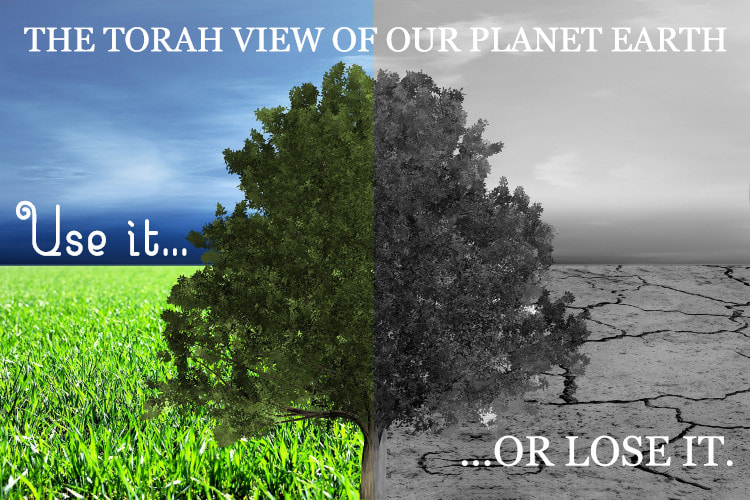
The Torah View of Our Planet Earth: Use It or Lose It

30/10/2019

 
Picture
Along the lines of Using Torah to Think Outside the Box, the Kli Yakar on Parshat Beresheit offers an interesting insight on the planet's true feelings toward human beings.

In one of the Torah's most oft-quoted verses (Genesis 4:9), Kayin (Cain) tells Hashem (according to the Kli Yakar's interpretation): "I did not know I'm my brother's keeper."

Meaning, he did not realize that murder is wrong.

But the Kli Yakar counters with the argument of seichel – reason, common sense: 
...and behold this is a mitzvah from the [easily] deduced [mitzvot]...that the seichel obligates you to fulfill this mitzvah even if you were not commanded because in negating it, a man swallows the life of his fellow.

"And the earth would bear desolation without any inhabitant" (Yeshaya 6:11 [includes Rashi]) and therefore, the earth petitions the offense of the murdered one because the existence of the earth depends on upon this [i.e., it depends on the existence of people].

If there would be a loosening of restraint for a man to kill his brother, then it would be impossible for the earth to exist because its existence would be nullified and ​it would become a dried-up ruin without any inhabitant...

​"...it would be impossible for the earth to exist..." 

"...it would become a dried-up ruin without any inhabitant..."

Contrary to the visions of environmentalists and Gaia-devotees, the absence of humanity would DESTROY the Earth.
​
​In other words, the Earth itself wants people around.

Despite the claims of nature zealots, the Earth itself does not view people as its enemy.

The Earth itself wants us to work it. 

It's GOOD for the Earth.

That's the Torah view right there.

​This is in direct contrast to what environmentalists and nature-zealots believe.

The Green movements harp on how we're damaging the planet.

And while that may be true to a certain degree in some situations, it's not innately true.

There is no such thing as "purity of nature."

Left to its own devices, nature would overrun & choke itself.

Yes, Judaism provides environmentally friendly halachot about bal tashchit (not wasting stuff), not uprooting fruit trees, Shemittah, and more, but well-tended land is good for the land itself.

For example, flower bushes and trees can wither for lack of pruning and weeding.
Picture
A GARDEN IN ERETZ YISRAEL (courtesy of coolspot77)
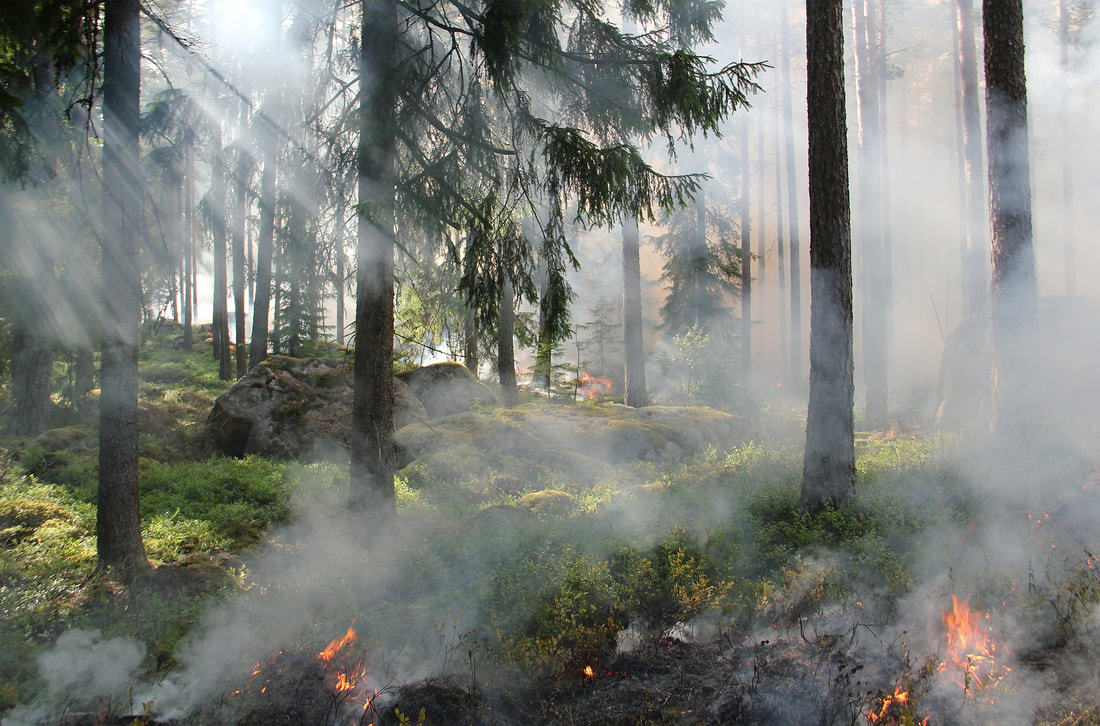
​Forest fires (which indigenous people sometimes lit on purpose) turn dead trees & decaying vegetation to ashes, which then fertilize the soil.

Fire also clears dead underbrush from the forest, which allows sunlight to reach the forest floor, which facilitates the growth of vegetation waiting beneath the soil.  
Picture
STYGGKÄRRET RESERVE IN SWEDEN BURNING MILDLY FOR CONSERVATION PURPOSES
In fact, in one 40-years-long experiment, a 23-acre patch of land was carefully protected from burning. This resulted in plant diversity falling by 90% and the 100% elimination of red-cockaded woodpeckers (source).​
Picture
RED-COCKCADED WOODPECKER (photo courtesy of Patti Black)
Fires create new hollows for birds to nest & thrive.

​No fires = No bird habitats.
​
So much for nature "preservation."


Interestingly, while "experts" haven't figured out how to "preserve" nature, the beneficial use of nature reaps rewards for all.

I believe this is because nature preservation for its own sake is basically playing God, which can't work. However, using the natural resources Hashem gifted us is basically fulfilling His Will for both us and the Earth...so He helps us do just that.

Today, many researchers believe that cyclical controlled fires actually prevent the really destructive wildfires that rage out of control.

So human beings can literally fight fire with fire by using controlled fires to prevent out-of-control fires.

Again, controlled fires aren't for the sake of "nature preservation," but for people & property preservation.

Hashem gave us this planet to USE it.

​This is correct & truly spiritual thinking.
Picture
OUR PLANET: USE IT OR LOSE IT (Photo courtesy of Marco Roosink)

Using Torah to Think Outside the Box

29/10/2019

 
​Years ago, I first heard the idea that while everything is in the Torah, you need to be a huge talmid chacham to extract it.

And in a nutshell, this was the heter to glean stuff (particularly psychology & self-help) from the non-Jewish world.

Initially, it was a relief to hear it.
​
Because I was so far away in my mind (despite being technically observant) from comprehending (let alone internalizing) original sources of mussar, the above concept really appealed to me back then. 

​Gradually, though, I saw it wasn't really true.


Obviously, we're allowed to glean stuff from the non-Jewish world.

However, when it comes to ideas that affect our inner selves and our ability to do teshuvah, it's actually very hard to discard the chaff (of which there is an ENORMOUS amount in popular psychology) and leave only the legitimate kernels.

That's why I really relished Rav Itamar Schwartz's statement that you actually need to be a big talmid chacham to sift through the secular stuff in order to get to the genuinely helpful stuff.

Here are Rav Schwartz's exact words from Woman's World 018: Avoiding Non-Jewish Influence (please scroll halfway to the section called "Who can learn psychology?") – the boldfaced underlined emphasis is my addition:
A person who is a very big Talmid Chochom, who learned the entire Torah – who finished Shas (Talmud Bavli, as well as Talmud Yerushalmi) and has learned the works of the Gra and the Maharal – he already has his outlook from the Torah, so he can sift through the information and see which non-Jewish literature is kosher and which isn’t.

​He is able to obtain permission to learn it, because he can know how to sift out what isn’t true.
As you can see, it's the diametrical opposite to the idea bandied about in frum outlets.

Blind Spots are No Heter

Of course, the original idea presented in favor of secular methodologies derived from the fear of people misinterpreting Torah ideas, and especially distorting them to cater to their own deficiencies.

It's true that people do that. It's a legitimate concern.

Yes, it's true that people can read Torah sources with their blind spots solidly in place, making it difficult for them to extract the lessons they truly need from it.

(Many people especially love distorting the Rambam's or Rav Moshe Feinstein's words & ideas to align with his or her goals & personal flaws.)

But there is also a matter of ratzon (desire, good will).

Without Ratzon, Nothing Helps (well, almost nothing, anyway...please see the next section for what can help when even the ratzon just isn't there)

If you have a sincere ratzon, you'll get what you need from the original sources.

It might take a while and you might experience lots of confusion at the beginning, but eventually, you'll get it. (Kol hahatchalot kashot – All beginnings are difficult.)

Throughout recent decades, we've seen that therapy often doesn't heal people.

Many people 
feel better with therapy, but they often don't behave better. And even the ones who technically behave better, they aren't actually so much better inside.

For example, I've met former alcoholics and others who've ceased obviously dysfunctional behaviors, but they still aren't emotionally healthy people.

​Like they still have a lot of narcissism — though not everyone, of course. 


I also know parents (or their abused children) who were physically abusive, yet when compelled by a therapist to stop, the parents simply became emotionally neglectful, sarcastic, mocking, or some other form of rejecting & abusive behavior that much harder to define & legislate.

And I knew one problematic young husband married to a verbally abusive young wife. When she really got going (and let me tell you, she did so with great relish), he would rap her on the mouth with his fingers. 

Needless to say, that crossed the line into physical abuse.

(FYI, I knew them both, and I knew her well enough before she got married.

They both had middot problems that needed serious attention.

​She might have been a bit worse than him, to be honest, but he also needed to whip himself into shape.)


So a frum therapist, the young husband's mother (who was a very frum lady), and the young wife's mother (who was also a very frum lady) sat him down and made it abundantly clear that he was never, ever, ever to raise his hand against his wife in any way whatsoever, and that doing so was completely forbidden.

And he never did it again.

Instead, he also unleashed a verbal diatribe whenever his wife unleashed hers.

As the young wife's mother lamented, "Now he's striking her with his voice instead of his fingers." (And yes, she admitted that her daughter was doing the same.)


This obviously did not solve the real problem for either one of them.

Now they both behaved in an EQUALLY appalling manner.

​Equality achieved!


Neither spouse worked on the core middot that led to halachically forbidden behavior, in which all abuse is forbidden by halacha, whether it is physical, verbal, mental, or emotional.

Yet in the above example, everyone involved simply responded according to the values & methods of secular psychology.

No Ratzon? So Just Keep Pouring It On

Likewise, a great many people in therapy simply become more narcissistic.

Why?

Narcissism is actually encouraged by popular psychology (though they use appealing words to get around that fact, so it doesn't look like conventional narcissist personality disorder).

But even if you end up with a genuinely wise therapist, you may not get much out of it unless you have a sincere ratzon.

So an insincere messed-up person might as well read Mishlei/Proverbs or make a daily study of Duties of Heart's Shaar Habechinah. 

It's sort of like Rebbe Nachman of Breslov's parable of the sick prince who couldn't swallow, and therefore couldn't ingest any medicine to get better.

​So instead, a wise Sage advised the doctors to simply pour gallons of medicine over his mouth, with the understanding that at least a few drops would drip their way in, even as the vast majority of medicine would be lost.

Deal with Negative Feels via Mussar, Not Therapy

When I saw a young woman on the bus behaving inconsiderately (as featured in The #1 Way to Deal with Anger & Other Intense Negative Emotions), what would a therapist have advised me?

Ultimately, the scene was a hint from Hashem.

​It was a message that even if we take a lackadaisical attitude toward our own Olam Haba, we need to know that behaving beneath the Torah's standards hurts our fellow Jews.

We are literally all in the same boat; we are literally part of the same body.

This is great chizuk to keep on going even if we've given up on ourselves.

​(Or even when we've convinced ourselves that something is okay "just this once...")

What therapist would've guided me toward the right kind of thinking?

True, a frum therapist here or there may have done so, but most would not.

How would secular methods have helped?

Secular methods would focus on me dealing with my anger toward the girl, on letting go or being more assertive, etc.

They (and therefore, I) would completely miss the very important mussar intended by Hashem.

(And no, I really haven't seen her since I got the message. Maybe she doesn't even really exist, and was just a pelephone-addicted golem created for mussar.) 

What If You're Allergic to Conventional Psychiatry?

Finally, Rav Itamar Schwartz mentions a very important fact unconsidered by many people: What's good for one isn't necessarily good for another.

You can recommend strawberries as wonderful sources of vitamin C along with other benefits...but what if a person is allergic to strawberries?

Peanuts & fulim (fava beans) contain wonderful vitamins & minerals...but they are a death sentence to those allergic to their properties.

Likewise, in the Q&A If a person has problems with rage and he wants to calm down, should he take pills?, Rav Schwartz reveals that the conventional "prescription" method of treating the physical body for building one's spiritual state comes from people who aren't Jewish and it only works for people who aren't Jewish.

In another post (Protection from Illness of Erev Rav), Rav Schwartz quotes Chiddushei Chatam Sofer, Shabbat 86b: 
The Chasam Sofer[1] stated that we cannot bring any medical proof from a non-Jew’s body to how we heal a Jew’s body, because since a Jew has a higher soul than a non-Jew, the healing is not the same.
​
The Chasam Sofer revealed to us a very novel concept – not only is a Jew’s soul vastly different than a non-Jew’s soul, but even their physical bodies are different.

​This was a real whomp between the eyes because, to me, it also implies that all the studies of the effects of these medications don't apply to Jews –​ unless they were performed on Jewish subjects...which also reminds me of a rav (I heard it attributed to Dayan Fischer ztz"l, but I don't really know) who said that this is also included in the meaning of ein mazal b'Yisrael, i.e., conventional mazal doesn't apply to Jews because Hashem set Jews above the natural influences of things. 

Physics applies to Jews (so don't drive too recklessly & don't do anything else dangerous), but "mazal" doesn't apply to Jews.

Back to medication: When, in Rav Schwartz's opinion, does a psychotropic medication play a part for Jews?

​His answer:
​In certain extreme situations, it may be used by a Jew who has fallen very low that for the time being, his life right now resembles a level that is very close to a gentile’s way of living.”

Really scrumptious food for thought.
Picture

Rav Avigdor Miller on Parshat Beresheit & Using the Mundane World for Spiritual Growth

24/10/2019

 
In this week's dvar Torah, Rav Avigdor Miller on Parshat Beresheit: Parnassah & Spiritual Growth, Rav Miller gets right into the bones of the parsha: the result of sin.

To protect ourselves from sin, we should utilize routine scenarios to remind ourselves (in an inspiring way) that this is the result of sin.

Two of the big curses are working by the sweat of your brow to earn your bread and raising children with tzaar.

So Rav Miller suggests that whenever you see an example of these curses (a man pounding into concrete with a jackhammer, a teacher struggling with unruly students, your own work woes, or the frustration of getting your children to bed), you should think about those 2 curses b'ze'at apecha tochal lechem or tzaar gidul banim and remember how great life could have been if we hadn't sinned, thus encouraging us to avoid sinning now.

Also, when you think these thoughts and these passukim in mundane situations, you are bringing Hashem into the picture and uplifting your soul.

Yay!

Gleaning Emunah from Muskrats & Other Animals

And we can also learn about Hashem's Wonders from animals. Watching animal behavior is a great way to build emunah.

​Rav Miller explains (pg. 9):
Every creature was provided by Hakodosh Boruch Hu the ability to care for itself. 

Every creature except one! Only man was left out.

Now that's a remarkable thing.

After all, man is the most perfect of all beings. 

Man has the ability to speak, to pass down information. He has more intelligence and also many skills that other creations don't have.

But he lacks the gift that Hashem has given to the rest of Creation. He has no natural instinct to care for himself, no means of providing parnasa for himself like all of the other creations.

Of course, if people would have any sense they would see immediately the biggest kasha – it’s the biggest refutation of evolutionists.

Because according to the evolutionists who claim that everything is the result of development, so the more a creature develops, the more its abilities and instincts should develop.

So according to them Mankind should have been endowed with everything – and instead he is endowed with nothing.

He doesn't even have claws.

At least let him have good claws.

Claws are remarkable; you can catch food with your claws. And if anything comes to catch you, so you can climb a tree.

And the instincts of man should also be more developed.

​A man should know instinctively how to build a nest. He should instinctively know how to make traps and catch animals.

Rav Miller goes on about the nifla'ot of spiders & beavers.

(It actually reminds me of Laura Ingalls Wilder's The Long Winter, in which Laura's Pa realized they were in for a hard winter because he'd never seen muskrats build their mud-houses so heavy and thick. "I don't know how they know," said Pa. "But they do. God tells them, somehow, I suppose." Then follows a little lesson in God's gift of bechirah for humans and how we're different than animals, and how muskrats can only make muskrat homes, but humans can make any kind of home they choose. It used to be that any person could gain knowledge of Hashem by looking at Nature. Then fake science came along...)
Picture
MUSKRAT LODGE

Emunah from Apple Seeds

In Gan Eden, Adam & Chava had the best foods in the world.

​Amazing fruits, including fruits and trees themselves that taste like any kind of food you can imagine. (It sounds like mann.)

But all that's just a distant memory now.

Instead, we need to work for our stuff.

Rav Miller suggests that we say a brief prayer before we do whatever we do, whether it's giving a class or selling something. We should offer a brief yet heartfelt tefillah to Hashem for success.

In the vort following the dvar Torah, Rav Miller recommends the following easy-shmeezy act to improve your emunah & simcha (pg. 17):
I’ll tell you a good idea. Let’s say you’re eating a tomato or an apple; spit out the seeds and put them in your pocket. Carry it around with you from time to time.

I do it.

I keep apple seeds in my pocket, and when I’m walking down the street I take them out sometimes to look at them. I marvel at them: “Ahh! Look at the miracle! This is why Hashem said those extra words in our possuk!” [i.e., "The tree is desirable as a means to wisdom” - Bereishis 3:6]

​People write to me that I should send them some of my seeds. I send the miracle seeds by mail. I go to the post office and I mail my seeds to people.

I wish I had known back when I first started listening to Rav Miller that it was okay to inconvenience him in such a manner.

And he was so nice about doing it too.

But I just never thought to send him a self-addressed stamped envelope with a request for his apple seeds.

It's good to collect things from big rabbanim: a dollar from the Lubavitcher Rebbe ztz"l, apple seeds from Rav Miller ztz"l...

Seriously.

Having these tangible reminders of how much a big rav cares about you personally, plus the idea behind the dollars or apple seeds...it's a good thing to have with you to contemplate when you're going through low times.

There's also a Q&A way at the end which presents a very good way to discuss nifla'ot haBorei with a small child. Nice!

(Also, Toras Avigdor has apparently improved their design with a new & very pleasant typeface & layout. All credit for all quotes here goes to Toras Avigdor.)
Picture
Apples bursting out of their blossoms

Who is a Jew? Disturbing Stories & Inspiring Stories – Plus How to Prevent Problematic Lineage from Affecting You & Your Descendants

22/10/2019

 
The idea of a secret Jewish or non-Jewish identity continues to intrigue many Jews, particularly religious Jews.

Me too.

Whether it's a potential convert from a Spanish-speaking country who discovers proof (or at least, compelling evidence) of a matrilineal line of Jews from the anousim or Jews who seem not to be Jewish (whether a possible Erev Rav soul-root or suspicions regarding the maternal line) or adoptees who uncover either Jewish or non-Jewish maternal ancestry, the underlying identity of a Jew or non-Jew continues to intrigue many of us.

For me, it has always been an enduring interest that refreshes itself anew every so often.

(As the generation above mine dies out without doing teshuvah or without even leaving Jewish descendants in some situations, my interest in the topic is renewing again.)

Nurturing Vibrant Trees with Robust Roots

Over recent years, I've found myself focusing more on & strengthening my own Yiddishkeit or wanting to exchange chizuk with other frum Jews.

In contrast to my former more kiruv rechokim-orientation, I found myself coming into kiruv-krovim — including being mekarev myself, if you know what I mean.

At this point, I feel that sincere davening for fellow Jews reaps more than external action, like talking and other kiruv-based interactions.

Having said that, for those who enjoy hosting secular Jews for Shabbos or passing out all sorts of Jewish pamphlets or Shabbos candles or giving kiruv seminars/classes, this is not meant as discouragement! 

On the contrary, if you enjoy and succeed at kiruv rechokim, by all means — CONTINUE.

​You're doing a lot of good!

But despite a lot of frum focus to the contrary, I'm slowly discovering the value of getting the core into healthy shape.

In other words, my focus has become more inner-directed. Not self-centered or selfish, but a fortifying of the roots and trunk of the tree, rather than developing more outlying branches.

While I don't necessarily apply this to those who clearly succeed in bringing assimilated Jews back into the fold, I feel that a deeper focus on improving and strengthening the core is vital — perhaps even more vital than searching out the assimilated.

(If our roots are strong and healthy, branches & blossoms will develop & multiply on their own.)

I think this reflects my renewed appreciation of Rav Avigdor Miller's approach, which clearly focused on building a vibrantly healthy core: a vibrant & sincerely frum Torah community connected directly to Hakadosh Baruch Hu.

Certainly, I developed a love of Rav Miller's Torah in my early twenties as a newcomer to frumkeit. I listened to so many of his tapes and bought the books containing his divrei Torah and Q&As.

​But I appreciate him even more now.

Focusing Inward

As described on this blog previously, it has taken me over 25 years to discover that I'm not remotely successful (to my knowledge) with kiruv rechokim.

And anyway, I see so much in myself that needs "kiruv." I've done so much work on myself over the years, and there's still so much work that needs to be done.

Furthermore, I can't help seeing how much there is to do within the frum community.

​Whether it's participating in helping mommies recover from birth, tending the needs of sick people, supporting poor people, single parents (whether divorced or widowed), kollelim & yeshivot...there is so much good to accomplish WITHIN the frum community!

Helping other frum Jews find employment, creating businesses to serve frum needs, and especially...SCHOOLS.

There is so much to invest in the frum school system to ensure our children receive all their needs (spiritual, academic, physical, emotional) and nurture their precious souls in the best way possible so that they can become the best Jews possible and merit a truly wonderful portion in the World to Come.

And many of we religious Jews very much need chizuk from each other. We need to continue deepening & expanding our relationship with Hashem, our emuna & bitachon, plus exchange "light" with each other.

In addition, the open secret that even many frum Jews feel uncomfortable acknowledging is that many of our most vital mitzvot apply mostly to Jews who are shomrei Torah & mitzvot REGARDLESS of their particular affiliation (and even if another FRUM group holds some hashkafot that produce friction against your group's personal hashkafot).

If another Jew is shomer Shabbat, shomer kashrut, etc., we have a mitzvah to love that person, give the benefit of the doubt, refrain from speaking lashon hara or rechilut about that person, and so on.

A fellow shomer mitzvot is "your brother" (or sister).

Are there dissenting and more expansive opinions?

Yes.

But the core opinion across the board is that a shomer mitzvot Jew is your brother or sister, to whom all the bein adam l'chavero mitzvot apply.

This is the Gemara. (Please see Rav Avigdor Miller's Should We Love Irreligious Jews? for a very brief summary.)

If one is not shomer mitzvot (and especially if a Jew is ANTI-mitzvot), then not everyone says this is "your brother."

It depends.

(Please see the above link, plus Rav Avigdor Miller on Learning To Love and Rav Avigdor Miller on Loving the Jew that Harms You for even more.)​

Excuse Me - WHO Exactly Did Hashem Take Out of Egypt Again?

Furthermore, I've reached the age where the generation above me has started dying out (may we all live in robust health ad 120, b'ezrat Hashem).

In my family & former non-religious Jewish community, people are intermarrying (sometimes divorcing and intermarrying again).

Among the movements for Reform & Conservative (which is actual extremely liberal) fake "conversions" are all the rage, further diluting the crumbling Jewish identity of ignorant Jews (and deceiving non-Jews) by declaring 100% NON-Jews as Jews, and making these non-Jews believe they are bona fide Jews too.

I recently received photos and enthusiastic emails about Rosh Hashanah meals, complete with honey cake and apples dipped in honey, in which not ONE participant in Jewish.

Three generations of participants...no Jews left.

Not one.

Just non-Jews, some of whom think they're Jews.

And while a non-Jew acknowledging Rosh Hashanah kinda makes sense (after all, it is a day of universal Judgement), these people will celebrate a Pesach Seder too, which has absolutely no connection to their history or souls.

But they sure love singing Dayenu and eating matzah ball soup.

I'm seeing Jews die without leaving one Jewish descendant.

A Jewish line stretching back centuries...culminates in a dead end.

And many of these people lived a lifetime steeped in cheit & aveirot (married to a non-Jew), some with random mitzvot interspersed within (like lighting Chanukah candles).

And despite all the information & resources available, despite the ever-expanding copious outreach & approachability of their nearby frum community, and despite outreach efforts directed at these people, plus being davened for by frum family members or other associates — these people make no steps toward teshuvah, not even one, until & including the moment they die.

Over 20 years of being their frum relative (including striving to be super-nice and receptive, sending these people appealing videos and links to kiruv websites, Shabbos invites — and actual Shabbos hosting, davening for them, plus their their own experiences — POSITIVE experiences! — of visiting Eretz Yisrael & the Kotel & spending Shabbos with a frum family, davening at a frum shul, and so much more) resulted in...nothing, nothing, nothing.

​No effort on anyone's part and no experience — no matter how pleasant — nothing in authentic Judaism has touched them one iota.

​What to make of it?

Who's a Jew? No, Really - Who IS a Jew?

Well, here's one possibility — an admittedly unpopular possibility for many Jews today, but it's one stated by the Rambam no less:
Rav Avigdor Miller on Are You a Descendant of Avraham Avinu?

Apparently, the Rambam states (I don't know where) that a Jew who NEVER comes back to Torah and Mitzvot is not from the seed of Avraham Avinu.

In his great integrity, Rav Miller acknowledges that this isn't necessarily set in stone: "...I wouldn’t be stubborn as to tell you definitely. There may be some exceptions to the rule." 

The fact that he describes his dissenter as a "chassidishe Rav" indicates that Rav Miller respects his dissenter's scholarship and that the chassidishe Rav based his dissent on legitimate sources and not sentimental feelings.

Also, Rav Miller himself admits that it's not necessarily absolute, as stated above.

Indeed, Rav Petiyah's Minchat Yehudah describes his encounters with Jewish souls who sinned throughout a series of lifetimes, never doing teshuvah and dying as complete degenerates.

They reincarnated again, and when they still didn't do teshuvah, they spent some time in unbearable hellish suffering in the Slingshot of Hell or an Ocean of Lava (which saying Kaddish helped to lift one man out of the lava for the duration of the Kaddish), then merited an afterlife rectification from Rav Petiyah.

Phew!

So who's right?

Well, we know that all the big poskim in Chazal are correct, even when they contradict each other:
​
  • I don't think it's difficult to say that in some situations, the unrepentant Jew really isn't Jewish at all, i.e., he is not from zera Avraham. 
 
  • Yet in other situations, he is from zera Avraham and will suffer another gilgul, some kind of Gehinnom, and/or rectification by a tzaddik if he doesn't do teshuvah in his lifetime.

In short (if I'm understanding everything correctly):
  • You can hold by the Rambam and it is perfectly within your right to do so.
 
  • You can also hold by an equally solid source that disagrees with the Rambam. It is equally within your right to do so.

But you can't go trashing the Rambam or any other fundamental source in Chazal.

​And, like Rav Miller says, I don't think we can claim to know for sure.

We can hold by one giant posek or another, but we can't say with our small minds that we know.

However, if you want to make the most lucrative investment in your fellow Jew, then going with those who are shomrei Torah & mitzvot seems to be the surest way to go.

Nothing is 100%, nothing is perfect, but investing in fellow shomrei mitzvot appears to be the lowest-risk investment.

What about Blobs?

One Jewish male family member who died this year was originally married to a Jewish woman. They had 1 son, then divorced.

(That son married a non-Jewish woman, had a non-Jewish daughter with her, then he died when his daughter was around 8.)

The Jewish male family member then married a non-Jewish woman (but got her a fake conversion first). The "conversion" was totally bogus. She never intended to keep the 10 Commandments, let alone kashrut or anything else. They lit Chanukah candles & hosted a Pesach Seder every year, but that's the limit of their "observance" as far as I ever saw.

A non-Jew cannot convert with the intention of profaning even a single commandment (i.e. "I'll keep everything EXCEPT..."); such an intention invalidates the conversion.

Anyway, they had 2 children together.

I knew this man my entire life and all I ever saw was a quiet blob who was sometimes grumpy.

He always reclined in his chair, either at the table or on the sofa.

If he was on the sofa, he clutched a beer in one hand and watched sports on TV, preferably American football.

But it didn't matter. Any sport would do. He even watched horse races.

Even as a child, I thought that was weird.

(FYI, I never saw him drunk, just indolent.)

Sure, he held down a job and provided for his family. But other than that, he was a blob. Sometimes, when his non-Jewish son Harley irked him, he said his sons name in a Brooklyn-accented warning growl: "HAWWW-LEEEE..."

But that was it.

His children never seemed to like him, even when they were young. They certainly despised him when they were older.

Toward the end of his life, this man developed mental & physical debilitation.

Due to the expense, his non-Jewish wife resisted getting care-assistance for him, despite her physical inability to care for him properly. (She was also getting old.)

A couple of months prior to his death, his non-Jewish thirtysomething-year-old son finally had it out with him, yelling at him that he was miserly and that the son was sick of the father being such a tightwad.

(The inciting incident was the son's purchase of $400 dollar tickets to attend a ball game.)

I seriously questioned the appropriateness of such a confrontation when one's father is in a both physically & mentally decrepit state.

Childhood resentments aside, it seems kind of mean.

Anyway, he died before his fake-convert wife really needed to hire professional assistance, so everyone was relieved.

And no one misses him in the least.

That's sad, but it is the most expected result based on the way he lived his life.

​To me, his whole life seemed sad & meaningless (and a bit grumpy).

Anyway, I'm not a mekubal and never will be, but since learning about the pinteleh Yid and all that, it has been hard for me to accept that this somewhat grouchy indolent useless & wholly assimilated blob was from zera Avraham.

The fact that he left absolutely no Jewish continuation, and that the one Jewish child he produced never displayed any connection to Judaism and also died with no Jewish continuation hints something to me.

I can't know for sure, but I'm with the Rambam in this particular case.

"You Know, Some of My Relatives are Jewish..."

I think we've all met people with surprising histories.

There are the people converting to Judaism who discover a possible Jewish ancestor, whether a mother who gave them up for adoption or a long-dead great-great-great grandmother.

A chassidic friend of mine was approached by a co-worker who said, "I see that you're Jewish. You know, some of my relatives are Jewish."

"Oh?" said my friend. "Like who?"

"Well, like my mother, for one," came the reply.

His Jewish mother married a non-Jew, then she died when he was a toddler.

​His non-Jewish father made a second marriage to a non-Jewish woman, who raised this man as her son.

So he felt he was fully non-Jewish.

Fortunately, my chassidic friend managed to gently break the startling news of his true identity to him and he showed up at her and her husband's Pesach Seder that year.

Jews Undercover in the Middle East

My husband & I once found ourselves in a taxi driven by an apparent Muslim-Arab who lived in a Muslim-Arab neighborhood near the French Colony in Yerushalayim.

In the course of conversation, he revealed his mother's mother was a Jew from Yemen.

After a brief pause, my husband asked him if he realized that made him Jewish?

Yes, he was aware of that, he said.

But he was well-entrenched in the Muslim-Arab lifestyle, including marriage to a Muslim-Arab woman, with whom he had children.

His story represents the greater tragedy among the Yemenite-Jewish community.

One of my sons, who attends a yeshivah with many Yemenites, said that literally everyone has a story of an aunt or great-aunt who was taken by Muslims in Yemen and forcibly absorbed into the Muslim community.

Yemen borders on Saudi Arabia and these borders are new, relatively speaking. Based on some of the pro-Judaism attitudes coming from some Saudis today, one cannot help but wonder whether they are descendants of these stolen Yemenite Jewish girls.

The truth is that families all over the Muslim world have stories like this.

Rav Alon Anava has mentioned his own family's story, explaining how because of this, he has Jewish cousins is Syria & Lebanon who believe themselves to be Muslim.

My sister-in-law's aunt or great-aunt suffered the same fate in Morocco.

​She was abducted & forcibly married to a Muslim.


A couple of years back, one of this abducted woman's sons contacted the Jewish relatives in Eretz Yisrael.

Though they accepted him with open arms, he betrayed their trust somehow (my sister-in-law didn't go into any detail), so as a result, they felt they could not trust him in their homes.

He returned to Morocco, leaving his mother's Jewish family members feeling disappointed & exploited.

"All in all, he was raised as an Arab," she explained to me, softly. "That's his identity and value system. He could not relate to us at all and was just trying to exploit the situation to his advantage."

Heart-Breaking True Story

On the subject of Yemenite Jewish girls being abducted:

We know a man who's great-aunt in Yemen was taken by Muslims in her preteens. 

One of the things they did to break these girls was to force them to eat non-kosher food. (Then it was easier to forcibly marry them off to a Muslim and everything else that followed.)

But this Jewish girl refused.

So they locked her in the cellar and told her she couldn't come out until she would eat their non-kosher food.

She died in that cellar.

A 110-Year-Old Mystery

Then there is the story of Ann Harrison, one of the children adopted from the now-famous Orphan Train:
​Orphan Train-Rider Stories: Ann Harrison/Mabel Rubin

Born Mabel Rubin to Jennie Rubin from Russia & Moe Cohen from New York, she was almost certainly Jewish, but baptized and raised by church-going Americans from the time she was a baby.

Needless to say Mabel/Ann lost all her Jewish identity.


Even when she discovered her real roots, it seems like she never returned. 

She had at least one daughter, Judy. Did Judy also have a daughter? It doesn't say.

But this probably-Jewish girl born in 1909 could easily have Jewish descendants today.

Maybe she has descendants converting or thinking of converting, with no knowledge that they are actually Jewish.

On the other hand, if you go by the Rambam, you could also postulate the reason why Mabel-Ann was basically lost to the Jewish people is because she is actually not from zera Avraham, despite the seemingly Jewish ancestry of her mother.

How's that for a whole big hodge-podge of "Only God knows"?

The Undiscovered Baby Exchange

Then there are the Jews who aren't really Jews.

(Yes, we're getting back to where this post started.)

When Irish-Catholic Alice Collins Plebuch took a DNA test for fun in 2012, she discovered that her proud Irish-Catholic father was most likely an Ashkenazi Jew.

Research nixed any possibility of illegitimate relationships or a hidden adoption.

​It took years and a couple of lucky "coincidences" to discover the truth.

​To make a long & convoluted story very short:

In September 1919 at the Fordham Hospital in New York, nurses accidentally switched the Irish Catholic baby Jim Collins with the Jewish baby Phillip Benson.

(The identifying mother-baby bracelets standard for today only came about in the 1930s-40s. In 1919, hospital births weren't common and certain practices hadn't yet developed. Hospitals relied on the nurse's memory and mother's facial recognition to determine whose baby was whose.)

So the Jewish family went home with a non-Jewish baby.

Did they ever suspect he wasn't really theirs?

No one knows, but interestingly, the parents of his first wife, Esther Abulafia, did not believe he was Jewish when they first met him.

Of course, they had nothing on which to rely their suspicions. They met the Bensons and saw they were bona fide Jews. 

As far as the Bensons were concerned, this person was their biological son.

Except that he wasn't.

​Think about that.

And think about how this probably wasn't the only time that happened.

(Even Rabbi Meir Lehmann has a based-on-a-true-story book about such a switch — I think it's called Del Monte.)

Furthermore, a post on this blog features other stories along these lines:
​​Only Hashem Knows, So Just Stick Close to Him

The Non-Jewish Yeshivah Bachur

I think we've all heard of situations, like the guy shteiging away at a yeshivah for baalei teshuvah who only informs his rosh yeshivah after 2 years that he's adopted; his Jewish identity isn't biological but adopted.

In many cases, the person converts. (The guy in the above example — the husband of a wonderful couple I met while becoming frum — converted & is an exceptionally fine Jew.)

But what if the issue hadn't been caught?

Or what if his parents hadn't told him he'd been adopted? (That happens less nowadays; but still.)

There's a famous story of an exemplary Ponevich yeshivah bachur in Bnei Brak who discovered his mother's conversion wasn't kosher. (That's a bizarre situation for a sincere convert, by the way. How did that happen? Not sure.)

Everyone was sure he'd convert too.

But he didn't.

Instead, he said: 

​“Why should I be Jewish? That's so hard. I can be a kosher goy, a Ben Noach, and be a tzaddik. It’s much easier to be a tzaddik Ben Noach than a Tzaddik of a Jew.”

Then he removed his kippah and left.

Here's a link to the story (scroll down toward the end):
https://www.shemayisrael.com/parsha/parkoff/archives/chukas72.htm

​And what if that issue hadn't been caught? How would things have continued?

What if he'd married a Jewish woman, as happened with Esther Abulafia, who spent her much of her life married to a non-Jew?

Looking to Our Tzaddikim & Their Tefillot for Guidance

This is one of MANY things for which we are waiting for Mashiach to sort out.

The Phillip Benson-Jim Collins switch is certainly chilling.

Esther Abulafia's parents are described as observant.

The initially expressed suspicions as to their future son-in-law's Jewish identity.

Yet their daughter unknowingly married a non-Jew.

She didn't want to.

Her parents didn't want her to.

But she did.

How on earth can one prevent such a hidden mix-up from happening?

Practically speaking, the best advice is found in our tefillot.

Looking over tefillot for parents to say for their children, I was struck by how concerned the tzaddikim were for ALL the future generations until the end of time.

For example, the Admor and author of Archot Aharon includes in his prayer a plea that one's children merit spouses from mishpachot kasherot v'hagunot (kosher and halachically proper families).

Rav Eliezer Papo, author of Pele Yoetz, composed several prayers for parents to say for their children, which also included kol yotzei chalatzeinu (everyone to issue from us) and kol zereinu v'chol hanilavim eleinu (all our seed and all those attached to us -- i.e, those who join our family, via marriage, etc.) to be without any blemish.

(He even includes a plea for all descendants to be from zera anashim — human origin — a topic beyond the scope of this post.)

In Sefer Tzavat Abba, page 24, the tefillah includes a plea for there to be nothing passul (nothing flawed that nullifies one's descendants) "in my seed and in the seed of my seed until the end of all generations, and may there not come into our hands and not into our seed and not to the seed of our seed until the end of the generations any transgression and passul and ugly thing..."

The book Tefillah L'Ani offers a prayer for "our sons and our daughters, our grandsons and our granddaughters, and about all that issues from us until the end of the generations."

​It asks that we merit "holy and pure neshamot" that are clean from "kol shemetz shel pagam" (any and all unholy speck of blemish).

"Neshamot" implies specifically Jewish souls.

​The above prayer repeats the whole "ad sof kol hadorot" (until the end of the generations) several times.

​In reading all the tefillot written by tzaddikim for parents to say over their children, it's impossible to miss their concern for completely kosher zera throughout all generations until the end of time.

Clearly, they foresaw the problems we've been seeing on a sharp rise over the past 150 years.

And again, there are hints in these prayers not only about obviously halachically forbidden unions (non-Jews & mamzerim & betrothed/married women), but spiritually undesirable unions (like with Erev Rav or non-human beings, etc).

​In short, there's a lot to daven for.

So for those of us concerned about this issue (and I think it IS a concern, especially nowadays), we've got these beautiful prayers to help us out.

​And other than that, we'll need to wait for Mashiach to come and sort us all out.
Picture
Related posts:
  • The Major Lessons We can Learn from the Story (including the agenda-driven portrayal of the story) of Jack Oskar: the Identical Twins Raised Apart in Vastly Different Circumstances
  • Guess Who Else is Jewish...

Fascinating Anthropology & Why Hashem Chose the Jews: Rav Avigdor Miller on Parshat V'Zoht Habracha

17/10/2019

 
Note: V'Zoht Habracha is read on Simchat Torah.

Rav Avigdor Miller's dvar Torah Parshat V'Zoht Habracha: And He Came Shining is really, really fascinating.

He delves into the meaning behind the famous story of Hashem going to the other nations and offering the Torah.

It's not literal, of course. And Rav Miller explains what was really going on.

He also explains the Gemara referring to the nations' protestations at the End of Days, when the nations will complain,

"Oh, but You didn't FORCE us to keep Torah like you did with Am Yisrael! So how can you blame us?"

And what all that means and how Hashem responds.

Rav Miller goes through different cultures throughout history, which I love reading.

In my youth, I was even intrigued by the differences between Americans & Canadians.

I studied anthropology (the study of cultures) in college and still maintain a fascination for other cultures, which is yet another reason why I love living in Eretz Yisrael.

It's a different culture that I get to "study."

​And there are so many different cultures of Jews here! I'm even married to a different kind of Jew! (My husband is Moroccan-Israeli while I'm Ashkenazi-American.) 

Just in our apartment building, we've got 4 different kinds of Chassidus, 2 different kinds of Litvish, 3 different kinds of Sephardi, plus different nationalities — ​this is tremendous fun for someone with an anthropological bent.

But to get back to the point...

A Detour into the Fascinating Topic of Anthropology

One of the things I learned in anthropology was something that anthropologists don't really want you to learn.

​And that's that some cultures' values are wonky, or even extremely repellent & immoral.

The anthropologists who settle down to live among the objects of their study tend to romanticize their subjects.

They end up viewing them with more amusement or positivity than the culture actually deserves.

My professor himself went to live among the natives of Alaska and developed a great fondness for them.

I must admit that seeing how real multigenerational-family igloos operate was pretty cool. And it was funny hearing his stories of his own adjustment to living with them.

But some of the books we had to read, books that were the culmination of years of intimate observation & involvement in tribes of the Amazon jungle or the African plains, held some very disturbing information.

In short, some cultures hold very different values, including some very ugly ones.

In another phase, I started reading what's known as "captivity narratives," which are about white people captured by various Native American tribes.

Initially, I'd read a book about colonial American women written by a white liberal female professor (of course!) and she whitewashed the real behavior of Native American abductors by plucking out the more civilized anecdotes for her book.

I had no idea that her compassionate and fastidious Native captors were actually the exception and not the rule. 

The red-haired Mary Jemison is the most famous of the Native Americans' white captives. Her real story, as chronicled in the 19th century (found online), shows extreme savagery as part of her adopted tribe's tradition.

Yes, she chose to stay with the Senecas and liked them, but she also needed to lower her standards to accept the extreme brutality and atrocity admired in her adopted tribe — including that of her second husband.

(Although she stressed that he never treated her personally with any such cruelty.)

She was even kind of proud of her second husband's heartlessness because she adopted the Seneca attitude that unmerciful cruelty toward the most helpless and innocent is somehow manly and heroic.

Another narrative involved the capture of a pregnant white pioneer.

She suffered terribly and eventually returned to her people, traumatized for life.

I found myself skipping entire sections of the narratives due to the extreme brutality of the tribes, making the sections too disturbing to read.

(Without going into detail, their treatment of captives, including children & babies, sometimes did not differ much from the way the Nazis treated the Jews.)

And lest you think that the tribes only behaved that way because of those who think that the white people started it first, please know that these horrific "traditions" preceded the white arrival.

​Meaning that previously, the Native Americans carried out these horrific rituals on captives from other tribes.

In other words, their treatment of white captives was simply a continuation of their traditional treatment of captives and not something learned from or incited by white mistreatment of Native Americans.

The point is that in society at large, there is a massive romanticization & justification of different cultures, both present-day and in our past.

But Hashem sees the truth.

And He chose us.

How Can We Fight Darkness Today? There's So Much of It!

We Jews, including we religious Jews, have problems today.

Okay, we were never perfect.

(Had we been, Mashiach would've come long before.)

But we simply aren't as bad, generally speaking, as the surrounding nations.

Rav Miller goes into this at length, and he is sometimes very sharp about it (which I greatly enjoy) in this dvar Torah.

For example, in addition to his knowledge of history, Rav Miller himself lived in Lithuania (while attending the Slabodka yeshivah) and describes Lithuanian culture of that time.

Who knew that a young Rav Miller was ready to rumble with a drunken Lithuanian who called him a dirty Jew?

Fortunately, Rav Miller's yeshivah friends saved him. Rav Miller the American Yeshivah Bachur didn't know that Lithuanians always kept a knife in their boot.

Even now, most of our dysfunction infiltrated from the influence of our surrounding environment; it's not innate to us.

In fact, most of the Jews who get so outraged by Jewish dysfunction (REAL dysfunction, I mean, and not political incorrectness) are outraged BECAUSE they're Jewish. Meaning, because their Jewish hearts cannot stand injustice.

​(There's also often a bit of hypocrisy and projection mixed in there too; nonetheless, there's no denying that we are the original Nation of: "Tzedek, tzedek tirdof — Justice, justice, thou shalt pursue.")

And there is still a lot of good to say about us, despite all the dysfunction & the problems.

You can't fight darkness with more darkness.
​
To fight darkness, you need light.


Rav Miller ends with the reassurance that if we take a baby-step toward Hashem by making an opening as minuscule as the eye of a needle, He'll expand it for us like a grand entrance and shine His Light on us. 
Picture

Perek Shirah's Song of Lightning: What Does Lightning Say?

15/10/2019

2 Comments

 
Here in Eretz Yisrael, we've been having some impressive lightning & thunder throughout Sukkot so far (though not as fierce as the thunder & lightning storms of a year or 2 ago).

(NOTE OF CLARIFICATION: The Sukkah storms of last year or the year before consisted of unrelenting booming thunder, which made it frightening to sleep in the Sukkah. This year, lightning played a stronger role, with the thunder not as strong or as frequent. The lightning also appeared as defined bolts, rather than large sheets of flashes in the sky, which is unusual in our area, meaning, the defined bolts are unusual.)

I've been in Eretz Yisrael for over 25 years, and these phenomena are a new thing.

There has also been some mighty wind, but interestingly only a bit of rain (some of which seemed mixed with tepid hail).

What is the message here?

I'm not sure, but Perek Shirah features the Song of Lightning:
בְּרָקִים אוֹמְרִים. בְּרָקִים לַמָּטָר עָשָׂה מוֹצֵא רוּחַ מֵאוֹצְרוֹתָיו

Brakim omrim: Brakim lamatar asah motzeh ruach me'otzrotav.

The Lightning Bolts are saying, “…He makes lightning for the rain; He brings forth the wind from his storehouses.”


​- Tehillim/Psalms 135:7

A glance at the main commentaries on this verse (Rashi, the Metzudot, Ibn Ezra, Radak, and Malbim) reveal some insights.

First of all, this verse appears in a Psalm lauding Hashem for all that He did to bring the Jews to Eretz Yisrael, starting off with pounding the Egyptians and taking us out of Egypt, continuing with pounding the Kanaanim and gifting the Jews with Eretz Yisrael, denigrating idols & their adherents, then ending with blessing those who serve in the Beit Hamikdash, and Hashem's Dwelling Place (so to speak) in Yerushalayim.

It begins with the word "Hallelukah" and ends with "Hallelukah."

The commentaries note that wind isn't seen on its own until Hashem makes it move, then we see it by it's effect on stuff and we hear it. 

Also, Hashem brings out the wind to blow the clouds to exactly where He wants it to rain.

But what about the lightning?

The commentaries note that lightning flashes brilliantly even amid rain.
"...and the rain does not extinguish it."

- Metzudat David

The commentaries note that the power of the wind is there all the time, but not seen until Hashem withdraws it from its "storehouse."

​Malbim states:
"...at the time Hashem will desire for rain to fall, the element of fire and elektri will separate and lightning will be produced."

Basically, the commentaries note the quality of lightning existing among an element that theoretically should extinguish it.

​In other words, the brilliant illumination of lightning occurs among that which should disallow its very existence.

As mentioned above, the this week's lightning has been mostly without rain, but its fundamental aspect of rising above its fiery nature and not being extinguished by water (including copious amounts of pouring rain) is still true.

So to summarize, the Song of Lightning hints at:
  • Hashem's All-Encompassing Mastery of even the routine aspects of nature
  • Hashem's Fondness for the Jewish people (as evidenced by gifting us Eretz Yisrael as our Divine Inheritance)
  • A solid & uncompromising adherence to monotheism
  • The paradoxical and very powerful nature of lightning to overcome its natural "enemy": water. (Not only is lightning not extinguished by even huge amounts of pouring rain, but it's not even diminished by rain, as evidenced by the astounding brightness & power of lightning.)

So there's some food for thought about the message of lightning.

(For the message in wind, please see Song of the Wind.)
Picture
Just a random photo of lightning in an unknown location, chosen simply for its prettiness.
2 Comments

Authentic Torah-True Self-Esteem & Self-Love with Rav Avigdor Miller on Parshat Ha'azinu (Hint: All that "Self" Stuff? It's Not Just about Yourself.)

10/10/2019

 
In Parshat Ha'azinu, we find that in Moshe Rabbeinu's painful last moments — intensified by his inability to enter his beloved Promised Land with the Nation in which he invested so much -- Hashem rebukes Moshe Rabbeinu.

In Rav Avigdor Miller's dvar Torah Parshas Ha'azinu: Recognizing the Greatness of Am Yisrael, Rav Miller points out that Moshe Rabbeinu is so great & his sin so fine-tuned (in Hashem's Eyes) that Chazal struggle to determine exactly what Moshe Rabbeinu's sin was.


Seeing as Moshe Rabbeinu achieved a closeness with Hashem that no other human being has achieved before or since, how could Hashem rebuke him in his final moments? 

Yaaay...US!

In Tanach, it's written that Hashem chastises those whom He loves.

By criticizing Moshe Rabbeinu in his last moments, Hashem ensured that Moshe Rabbeinu would come into the Next World COMPLETELY cleansed of even the most minuscule speck of ego.

Remember, Moshe Rabbeinu was one of the humblest people who ever existed.

​By criticizing him in his last moments, Hashem ensured the best Afterlife possible for Moshe Rabbeinu.

"The Bnei Yisroel,
despite all the criticism,
​actually because of all the criticism,
will remain His people & His servants till the End of Days.
And that is so important to understand."


-Rav Avigdor Miller


This is so different than the ideas behind anyone's uppity "replacement theology."

(Not to mention the dire threats & curses Hashem promises to heap upon anyone who harms His People in any way.)

​Rav Miller's next words are so important, I can't help copying & pasting the entire text here [all text in square brackets & boldface my own clarification/emphasis]:
We live in a world that doesn’t accept the greatness of the עם ישראל [Am Yisrael/Nation of Israel]. 

It’s a world of darkness and sheker [falsehood].

And it has an effect on us. Absolutely it does.

And therefore, you will have to put effort into internalizing the truth of the greatness of our people.

And no matter how much you speak about it, it won’t be enough.

​Now, I know that you all think that it’s a waste of time for me to talk about this.

You all believe it already. You all believe that the עם ישראל is Hashem’s beloved people.

But it’s not enough to simply believe. That’s almost worthless.

You have to know and understand the greatness of our nation more than you know anything else in the world.

There is a certain prevalent attitude of knocking the frumeh, the best that our nation has to offer.

We have to be aware of this and realize that there is a certain form of anti-semitism in Jews themselves. When Jews knock the frum community it’s nothing but an echo of the anti-semitism in their own hearts.

You don’t realize how much the environment outside is affecting you.

I know that you don’t want to hear this, but most of you in this room are goyim. Yes, you are covered with a thin layer of Orthodoxy, but under that, if you scratch a little bit of the paint off, you’ll find that you’re thinking like the goyim around you.

It’s affecting you all the time.

The negative comments about frum Jews – whether individuals or different groups – that one hears from Orthodox Jews is simply the infiltration of gentile propaganda into our minds.

Not only gentile influence, but even more insidious is the influence of the non-religious Jews.

The Reformers, the Zionists, and all the Jewish resha’im have nothing but contempt for authentic Torah Judaism, and for those who practice it.

We live among the resha’im, we see them, we speak with them, we read their writings, and we therefore think like them.

And therefore, the only way to counter that propaganda is by heaping praises on the Klal Yisroel as often and as much as you can.

​Everywhere you go, you can find opportunities to speak the praises of the עם ישראל. And if you can’t find opportunities, then you have to be wise enough and alert enough to make them.

Every day brings you many varied opportunities to propagandize on behalf of Hashem’s people. 

​(Note: If you are either offended by or can't imagine how Rav Miller could possibly call Zionists "reshaim," then please see A Review of "Guardian of Jerusalem" and What Do the Sephardi Gedolim Say about Tziyonut, the Medinah, and All That? You may still not agree, but it helps to at least understand why someone else thinks the way he does.)

And maybe it's important to acknowledge that yes, people will accuse you of being an apologist. 

People will accuse you of having your head buried in the sand or of sporting rose-colored glasses. 

​People will respond with unpleasant stories of the misdeeds of frum-looking folk (whether true or not).

And from personal experience, it does not matter much if you acknowledge the ugly warts marring the frum community as you extol its virtues and all the wonderful people you've met that you never met or heard of in any other community in the world.

Acknowledging the warts is simply not "honest" enough for some people. 


Unless you're trash-talking the frum community, you may be considered a distasteful, stupid, naive, hypocritical, blind apologist.
​

But you're not. 

Unconscious Propaganda-Indoctrinated Hypocrisy

Unfortunately, I was also affected by this at one point, thinking that being negative or focusing on negativity was being "honest."

I see that many, many frum Jews of all different stripes also suffer this mistaken assumption (again, with the very good intention of yearning to display honesty & sensitivity).

It was only after feeling somewhat battered during so many conversations with non-frum Jews (or anti-charedi Orthodox Jews) that I started to wake up.

Whether it was people I'd known and liked my whole life — and felt they'd always liked me too — or getting blindsided after I thought I'd made a completely innocent and inoffensive comment (including all the mental struggle to find just the right words so as not to offend, then the other person getting all offended anyway), or being confronted out of the blue in a way that would NEVER be tolerated by that same person if I (or any other frum person) would dare do that...I started to realize who the real hypocrites were. 

(Even though they didn't mean to be hypocrites; it was unintentional hypocrisy resulting from living in a culture in which the views deemed "politically incorrect" are presented in a distorted manner.)


For example, when I visiting my parents in the USA, an old family friend and one of my favorite adults growing up stopped by.

We were all enjoying a friendly conversation that drifted to the state of many "Conservative" (who are actually anti-Torah liberals) Jews in New York (where this man was originally from), and how it differs from "Conservative" Jews in most other parts of America.

Mentally struggling to find just the right word and keep the conversation inoffensive (for them, anyway), I settled on what I felt was a fairly neutral word: "traditional."

So I replied that the "Conservative" Jews in New York seemed more "traditional" than in other areas.

This old family friend smirked, then said, "You mean RIGID!" Then he and some others (not my wonderful parents) chuckled self-indulgently.

I felt punched. And outnumbered.

No, I did NOT mean "RIGID."

"RIGID" is not how I view people who are basically shomer Shabbat and observe more of the authentic halacha. (Halevei these "Conservative" New York Jews would become fully frum!)

And it's odd how he knee-jerk responded to the word "traditional."

​"Traditional" really can be viewed positively, negatively, or neutrally.

​It's interesting that he reacted so defensively to the (accurate) insinuation that the more mitzvah-observant "Conservative" Jews in New York were indeed more, well, traditional. 


Turning it around, how do you think this same person would respond had I said that "Conservative" Jews outside of New York tend to be even more compromised and assimilated than their already somewhat compromised and assimilated New York counterparts?

That's actually TRUE, by the way.

"Conservative" Jews ARE compromised and assimilated.

​Even the ones who don't mean to be and are simply misled by their pompous leadership, even they are still compromised and assimilated.


Do you see what I mean?

Double standard.

(In case you're wondering, I did not respond in any way, nor did I show I was hurt or offended.)

​That's just one example.

Where is All That Religious Coercion I Keep Hearing About?

Anyway, I started to realize who really engaged in thought-policing, "religious" (i.e. secular or anti-Torah) coercion, the imposing of their "religious" beliefs on others, and so on.

I couldn't help noticing that the most open-minded people, the people most concerned about the feelings of others (including those with differing opinions) were the more religious Jews -- whether they classified themselves specifically as charedi or whether they were just sincerely frum Jews who strove to uphold every iota of halacha regardless of any label.

As written in previous posts, I've had very positive experiences with the level of open-mindedness of the Yerushalmi women I met when I lived in the Geula-Meah Shearim area of Yerushalayim.

I've repeatedly seen how so many frum Jews try to reassure others to feel comfortable around them, try very hard to hold onto their own values without offending others (keeping to the laws of lashon hara, for example, can be very tricky in today's culture of "I-have-a-right-to-express-myself-darn-it-and-if-I-can't-then-there'll-be-heck-to-pay").

Are You Searching for the Key to Self-Love & Self-Esteem? Introducing the REAL Pure Torah-Style Expression of Self-Love & Self-Esteem...

Rav Miller suggests we avoid wasting opportunities to insert Torah positives into conversations at:
  • weddings
  • bar mitzvahs
  • waiting in line
  • any other social opportunity

Rav Miller suggests we notice (and APPRECIATE) the following:
  • families with many children
  • a mother walking with a baby carriage
  • tsniusly dressed girls 
  • little boys wearing tzitzit & kippahs
  • fully kosher homes (despite the extra expense and effort involved)
  • fully kosher mezuzot on every doorpost of every home (not cheap, especially the beautified ones) — and then you need to tend to their upkeep and check them every so often
  • frummies give 10% (at minimum!) of their earnings to tzedakah (and NOT meaningless art museums, but REAL tzedakah)
  • all the Jewish parents who send their children to frum schools, despite the expense (especially in America) and sometimes the distance (I met a Chabad family in Long Island who drove their daughters to an excellent frum school that meant driving one hour EACH WAY every day!)​

If you live in a frum neighborhood, and especially if you live in Eretz Yisrael, you get to see sukkot everywhere. It's a real joy, especially if you grew up as a Jewish minority in America.

Instead of Halloween decorations hawked everywhere & carols already crooning from the radios and mall loudspeakers in November, you hear frum pop music and see sukkah decorations for sale until all hours.

​Sukkah boards and lumber stand along sidewalks and stick out of the backs of cars.

During Sukkot, you get to hear everyone singing from their sukkot because you're all outside together.

Baruch Hashem, we have such sounds and sights in our Land once more! May all Jews be redeemed sweetly to Eretz Yisrael and may Hashem erect the fallen Sukkah of David Hamelech.

And again, especially in Eretz Yisrael, the Sukkot weather is usually very pleasant (unless you live in a very humid area or there are thunderstorms & rain once or twice during the week-long holiday).

But heck, even that's part of the fun, everyone needing to escape into the house in the middle of the night. (The children, anyway, have very positive memories of this as fun.)

"A whole nation of people, all types of people,
sacrificing and laboring for their ideals,
for Torah ideals.
And they are a people that are loyal to Hashem.
There’s nothing better than the frum community,
​make no mistake about it."
​

- Rav Avigdor Miller


Of course, Rav Miller acknowledges that some frum people aren't behaving as they should.

​Yes, there is what to criticize.

He says it in the long quote above.

He says it in most divrei Torah. 

He says it in his advice for shalom bayit.

But he loves his fellow frummies anyway.

And he emphasizes that there is actually a lot to love!

Having lived in different places and communities throughout my life and having studied anthropology (the study of other cultures) in college, I can definitely attest to the fact that the level of chessed found in the frum community is unparalleled.

It may not always be perfect, but even with its flaws, it's unparalleled.

Recent emergency tzedakah campaigns have demonstrated the profound achvah we feel for each other and our generosity proves our respect for the mitzvah of redeeming captives or aiding the sick.​

"There’s no better time than now,
as we begin the new year,
to make a commitment to yourself.
This year is going to be a year of raising the banner of the greatness of our people.
​This year I’m going to look only at the good of our people – because really there is so much good to see."


- Rav Avigdor Miller  


There's an art to finding and focusing on the good points of Am Yisrael, particularly the frum community.

Rav Miller acknowledges that you need to plan for it. You need to make a project out of it.

This is very important as far as sweetening din goes too.

Rav Miller quotes Mesillat Yesharim (Chapter 19) on this:
​”אין הקדוש ברוך הוא אוהב אלא למי שאוהב את ישראל — ​Hashem only loves only those who love the Jewish people” 
​(Mesillat Yesharim is a sefer with which no one can disagree. If you start quoting the Tanya, the last Lubavitcher Rebbe's sichos, or Rebbe Nachman's Azamra, people think it doesn't apply to them if they aren't in that group. But who is going to dismiss Rav Moshe Chaim Luzatto?)

"And therefore,
​what better way to find favor in the eyes of Hashem,
than to praise and love His people.
Think of their praises all the time.
Speak of their praises all the time.
And love them all the time because of their greatness.
And the more you do that, the more Hashem loves you.
And there is nothing greater in the world
​than the love of Hashem."


​-Rav Avigdor Miller


All credit for all quotes goes to the much appreciated Toras Avigdor.
Picture

The Netivot Shalom on Doing Deep-Rooted Teshuvah by Utilizing Shabbat as the Day of Love

6/10/2019

0 Comments

 
For a couple of years now, I've been wanting to take a look at the famous collection of volumes called Netivot Shalom by the late Slonimer Rebbe Rabbi Sholom Noach Berezovsky ztz"l.

Rebbetzin Tziporah Heller gave a lecture series on it and Rebbetzin Esther Baila Schwartz called Netivot Shalom her "best friend," plus Rav Itamar Schwartz named it as one of his recommended mussar sefarim for women to learn. 

I don't know how much I can get through it at this point, but I figured it would help me out during the 10 Days of Teshuvah between Rosh Hashanah & Yom Kippur.

And it has!

I haven't completed its section for these 10 Days of Teshuvah (called Bein Keseh L'Asor), but here is the little bit I've gotten out of it and found so helpful.

(It's mostly from Ma'amar 4, Shabbat Shuva is the Root of Teshuvah.)

First of all, Rosh Hashanah renewed us all.

Literally.

We are totally new creations, the Universe is new, everything is new.

This is what enables you to do teshuvah right now and transform yourself deep within.

You literally are NOT the same "you" you were last year — which was only a few days ago.

You are different and NEW. So you can do different stuff than you did even just last week.

And with this new & improved you, we cruise into Yom Kippur. 

The 2 Most Powerful Aspects of Shabbat

Shabbat is the most amazing way to do teshuvah.

Shabbat can even forgive a Jew who "worshiped idols like the generation of Enosh."

How is that remotely possible?

Shabbat does 2 incredibly powerful things:
  1. Shabbat effects a deep-cleaning; it cleanses & rectifies your very neshamah.
  2. Shabbat is a day of love; you are the zivug of Hashem on Shabbat.

When you keep Shabbat, you are completely nullifying yourself to Hashem, which is what cleanses you from avodah zarah and other frightfully yucky stuff.

Netivot Shalom enthuses a lot about doing teshuvah on Shabbat.

But how can you really do teshuvah on Shabbat?

After all, thinking about your sins makes you depressed — a big no-no on Shabbat.

There is no vidui on Shabbat, and the sections of confession don't appear in the Shabbat Amidah.

It seems that Netivot Shalom mentions teshuvah as coming close to Hashem.

FEELING close to Hashem. Thinking about Him whenever you can on Shabbat.

​If you imagine that Hashem is your zivug, like the most loving & cherishing spouse you could imagine, then you should speak & relate to Hashem in that way.

Go to Where Your Heart is

There's a famous verse in Shir HaShirim:
Ani yeshena v'libi er — I am asleep, and my heart is awake.

The mundane flawed you is the "I am asleep."

Shabbat is the "my heart is awake."

You might be asleep, so to speak, but Shabbat is your aroused heart; it's the neshamah that clings to Hashem.

Now, Shabbat Shuva (the Shabbat between Rosh Hashanah & Yom Kippur) is the most powerful Shabbat for neshamah-cleansing and deep-rooted teshuvah.

But hey, I missed it too because I didn't get to this part of the sefer before then.

Still, it's good to know that ALL Shabbatot produce this wonderful cleansing & forgiving effect.

​As Netivot Shalom states:
The teshuvah of Shabbat is not teshuvah on sins and deeds.

Rather it is the Day of the Neshamah.

The teshuvah that you do on that day is regarding however you distanced from Hashem Yitbarach, and through Shabbat you can return until [the level of] "Hashem Elokecha."
But what if you're just not feeling it? What if your 10 Days of Teshuvah seem to be the 10 Days of Blah-Blah?

But What If You're Just Not Feeling It?

Don't despair if you're not feeling it during this special time.

It simply means that you haven't succeeded in completely rectifying your distance from Hashem.

​You may have rectified some of it, but not completely.

So what should you do?

Take upon yourself this idea of Shabbat Kodesh.

As Netivot Shalom says:
And when a Jew does his cheshbon nefesh, when he already passed his days of teshuvah, the month of Elul and the 10 Days of Teshuvah and all the great days within that time. 

And he is already about to enter the holy day of Yom Kippur...and he doesn't feel any change in himself at all, so much so that he finds himself about to enter Yom Kippur with empty hands.

The advice for him is that he should take himself to Shabbat Kodesh.
...
One moment from Shabbat is more important than many, many hours of the weekday.

Shabbat is the time to get back in touch with your soul-root. It's the time to really cleave to Hashem.

Right now, you can think about Hashem or talk to Hashem as there is "no curtain" between you.

You can also think about how to improve your future Shabbatot.

Bringing Shabbat in a little earlier, adding a special food, setting some time aside to think about Hashem, to focus on that emotion of closeness & deveikut, to just feel happy even for a few moments...

These are all ideas that effect powerful transformation at the soul level.

And if you haven't been keeping Shabbat?

Now is the time to decide to keep whatever you can throughout Shabbat, whatever you know about keeping Shabbat.

And try your best to get that feeling in there too, even if it's only for a moment.

Shabbat is all about the deepest, purest kind of love there is.

And that is exactly what rectifies your neshamah and brings the real you back to your soul-root.

Picture
0 Comments

Rav Avigdor Miller on Parshat Vayeilech: Why is Material Abundance So Incredibly Dangerous? And What the Heck are We Supposed to Do About It?

4/10/2019

 
In this week's Parshas Vayeilech – Test of Abundance, Rav Avigdor Miller offers some very interesting insights.

First of all, he explains that the Chivi nation (one of the 7 Canaanite nations within Eretz Yisrael before the Jews entered as a Torah Nation) were soil-experts.

Different kinds of vegetation needs different kinds of soil. Some need more alkaline soil, some need more acidic soil.

Chivi comes from the Aramaic word for "snake": chivya. These Chivim would taste the soil (like how snakes lick dust) and based on that, they decided what to plant there.

Rav Avigdor Miller paints a picture of this ancient Eretz Yisrael (pg. 2):
And so, in Cana’an were found the biggest agricultural experts that ever lived.

And because they put everything they had into beautifying the land, the whole land became like one big garden.

They terraced every hill, every mountainside, in Eretz Yisroel.

There wasn’t a span of earth that was uncultivated. And the very best produce grew there.

It was a remarkable thing what they made from that land.

​If we could take a look at the land as it was when the Bnei Yisroel entered, we would have gasped in amazement at the remarkable fertility of that land.
Picture
The Golan Heights (courtesy of Joe Markiewicz)

And this was precisely the problem for Am Yisrael.

What is an Even Bigger Threat than the & Canaanite Nations?

What was the biggest danger Am Yisrael faced upon entering the Land?

The occultist human-sacrificing warrior Canaanite nations?

Nope. Hashem dealt with them.

The biggest danger was being given this botanical Land flowing with milk and honey, this fruitful Land dotted with beautiful homes.

As it says in the parsha to Am Yisrael: You'll eat. You'll even be satiated. And you'll be able to eat so much, you'll get fat.

And then you'll turn to the gods of others.

"Hishamru! Watch out!" says Hashem in the parsha. "Lest your minds will be led astray."

Rav Miller comments (pg. 3)
When there’s plenty to eat, that’s when people have to watch out.

Then Rav Miller enumerates different societies: the Mayans, the Ancient Egyptians, the ancient Greeks, the Romans...they all self-destructed after they got wealthy.

It's true that when Americans needed to work for their food, they were better off, ethically speaking.

​Prior to the 20th century, Americans loved Mishlei/Proverbs & Kohelet/Ecclesiastes, naming their children from Tanach or after middot lauded in Mishlei.

("Charity" & "Patience" used to be popular names for girls, while "Reason" & "Truth" were popular for boys.)

Basic manners were prized, as were the embodiment of Mishlei middot like humility, honesty, and integrity. 

Women provided a natural barrier to negative social behavior, with men curbing their behavior and speech around females, and the expectation to behave with chivalry meant that men needed to treat women with extra courtesy & selflessness — and sometimes, even with courage in situations demanding the protection of females.

Women too were expected to behave in a dignified manner with appearance, which encouraged dignified male treatment.

All this is looked down upon in modern society, to the harm of both men & women, though most won't admit this.

And while so many old-fashioned names have come back in style (including Biblical ones like Elijah and truly strange ones like Atticus), the "virtue" names are some of the only old-fashioned names NOT being used.

And while people will name their children any other name, no matter how strange, people just aren't interested in naming their children Patience or Reason.

​Scarlet? Yes. Ch@stity? No.

In fact, one baby-name website discourages people from using the name "Ch@stity," calling it "so weird, it's cruel," while another insists that it will cause the child deep psychological problems later in life.

Yet the first website sees nothing wrong with the "L" name of a well-known demoness, which has become increasingly popular for American girls in recent years.

​And yes, the origin of the name is clearly stated, yet apparently it's not considered weird or cruel to call your daughter that name.

​It's a sign of the times.

Furthermore, it's ironic that amid the greatest food abundance in history, eating disorders like anorexia & bulimia have become serious threats. You'd expect obesity in a society bursting with easy access to abundant food, but starvation and purging? 

Only societies with an overabundance of food can afford such eating disorders in such large percentages.

What is the Big Danger of Material Abundance?

At the same time, Rav Miller cautions us to appreciate America for all it has given the Jewish people: the freedom to build kosher shuls, kosher schools, and walk as a Jew down the street.

(Unfortunately, this is changing in America. But at the time of Rav Miller it was still true and let's face it: The current upswing in hateful acts against Jews is still not what it was in many places in Europe in the 20s & 30s.)

But throughout the dvar Torah, Rav Miller emphasizes that material abundance is a terrible danger.

Material abundance even causes people to forget Hashem.

They rebel against Hashem.

And if you look at the children of billionaires, you see a lot of issues with drugs, eating disorders, petty crime, and wanton behavior.

Even princesses have had children out of wedlock and it's no longer something they need to hide.

And with so much money at their disposal, why don't they make major donations to change lives?

I don't mean show-donations (where the money gets funneled into the pockets of the organizers or stolen by thugs) or creating not-terribly-useful make-me-look-good charities; I mean really changing lives & even societies for the better by channeling their money and their skills in the right way. 

But no, they focus on their hobbies and their parties and, for some of them, their celebrity status & their brands.

The Callow Kasha

I admit that when I first became frum, I didn't understand making a shehechiyanu on a new outfit.

"You just go into a store, try it on, pay for it, then take it home and wear it. What's the big deal?" I didn't understand how it was different than buying a bakery cake.

(I'm a bit embarrassed now by my naive lack of understanding & appreciation back then.)

I expressed my puzzlement to a couple hosting me one Shabbos, and they chuckled good-naturedly, then explained that in the not-so-distant past, a new piece of clothing was a big deal. Accessing & choosing fabric, plus all the manual labor than went into it — it was a VERY big deal.

The metaphorical light bulb snapped on, and I immediately understand how callow I was — without even realizing or meaning to be.

My family was "just" suburban middle-class, but even that was too much in the sense that Rav Miller means. Because I didn't appreciate exactly what a new outfit meant, I couldn't understand thanking Hashem for it in a whole special bracha. (Back then. Now I get it.) 

And that's just a small example of how material abundance distances you from Hashem if you're not careful.

When "Kosher" Mediocrity isn't Enough

On page 10, Rav Miller explains the main name for the yetzer hara: chatat. (Or chatas, if you're Ashkenazi.)

You come across the word cheit a lot in Torah literature. It's usually translated as "sin."

But these related words (chatat & cheit) actually mean:
“to miss out” — to not utilize the opportunity of life to become something.
Rav Miller stresses that if you're not trying to achieve personal completion in life, if you're not trying to intensify your awareness of Hashem, then you're missing out.

You can really end up sinning when you just settle for "kosher" mediocrity.

Rav Miller explains that experiences like Yom Kippur & teshuvah cleanse you of sin. Gehinnom also cleanses you of sin. It's painful & takes a while, but it cleanses.

Yet being clean isn't enough.

To really make it into Gan Eden, we need to step up our game.

​On page 11: 
To live in the World to Come you must have accomplishment. And that’s the big test, the most important test in this world — are you making something from yourself? If a person fails to accomplish, for that he can never atone!

He doesn't mean you can't do teshuvah for not living up to your full potential.

You can always change yourself for the better!

He means that at the end of the day, if you were meant to be a big baalat chessed or write sparkling chiddushim, yet you were texting or surfing instead, atonements cannot turn you into a baalas chessed or a talmid chacham. They can only cleanse you of the sin.

​But they can't accomplish what you could have had you made the effort.

A List of Meaningful Activities 

On page 12, Rav Miller elaborates on the types of meaningful things people could do with their time:
  • attend shiurim
  • listen to mussar
  • increase daat
  • learn Torah
  • learn halachot
  • increase Torah
  • increase yirat Shamayim 
  • learn Chumash properly
  • learn Mishnayot properly
  • learn a little bit of Gemara (at least)

For women specifically, he adds:
  • read good books
  • increase knowledge of lessons in Tanach
  • increase knowledge of lessons in history
  • increase knowledge of yirat Shamayim

​Rav Miller adds:
The Gra told his daughters to learn mussar seforim. Absolutely; it’s very important. A girl, a woman can become very great in acquiring a Torah mentality, a Torah mind, no less than a man.

Following the above, it should be emphasized that Rav Miller was no apologist.

He said whatever he understood was the Torah truth, even if it made people mad, even if they rejected him, left his shul, stopped talking to him, and wrote him angry letters or subjected him to angry phone calls or subjected him to public disagreement carried out in a disrespectful manner or called him names.

He was like a superpower locomotive charging down the iron track of daas Torah; nothing could stop him or derail him.

So when Rav Miller states that, just by virtue of learning whatever she should learn and coming close to Hashem, a woman can become very great in acquiring "a Torah mentality, a Torah mind, no less than a man"...you can certainly take him at his word.

​He's not blubbering up to the feminists. He darn well means what he says.

What is a Cheit?

The great sin we need to teshuvah for on Yom Kippur, says Rav Miller, is the tragic cheit of not accomplishing enough spiritually.

Yes, he asserts that forgetting to say ya'aleh v'yaavo in Rosh Chodesh davening or letting grumpy word slip to your spouse are indeed sins for which we must regret and ask forgiveness (also from the spouse). 

All the things we did wrong or forgot must be included in Yom Kippur.

But the main thing, the big life-transforming cheit, is that of missed opportunity.

It is all the times we could have done something good, but didn't.

It is all the times we could have spent our time meaningfully, but didn't.

It was all the opportunities we had to increase our closeness to and awareness of Hashem...but didn't.

More Than Just Frum: How to be a Real Success

Then Rav Miller elaborates on the lifestyle of kosher entertainment.

This is the big challenge of our generation.

We have so much. What do we do with it?

For those who can afford it, there are kosher cruises with "kosher" entertainment. There are 5-start hotels glatt l'mehadrin. There are amazing European vacations — all glatt l'mehadrin, no gebruchts, separate swimming, Shabbos locks on the doors, etc. etc.

We have kosher movies, kosher novels, kosher circuses, kosher comedy, kosher designer clothing and accessories, kosher treifus (if you know what I mean).

Women can totally knock your eyes out today (according to the creme de le creme of goyishe standards), while technically covering her knees, elbows, and hair. She may not even look frum or like she's covering her hair.

American have Sundays to fill. Many frum schools make Sunday a half-day of learning for the boys (which comes with its own challenges, BTW), but Sundays can still offer frum families the opportunities for glatt entertainment & other activities.

​Boating, fishing, shopping — these aren't evil or sinful, but are these really activities a Torah Jew should be indulging on a regular basis? (I mean as regular lifestyle and not as an occasional rejuvenating activity.)

In the modern Orthodox community from which I initially entered into Orthodoxy, Motzai Shabbos was definitely movie night, either going out to the theater or renting a video at home.

Of course, it stands to reason that a person might occasionally need a kosher venue as a break from a truly stressful life. People struggling with family illness might take advantage of Sukkot in a hotel with all the amenities, for example.

The phenomenally hospitable & unmaterialistic Machlis family spent Pesach in a hotel in order to have true family time together & to really pass on the Pesach mesorah.

But pages 10-14 elaborate on all the ways many precious Jews get caught up materialism. Even when it's combined with spiritual meaning, it doesn't always justify the means or the ends. Sometimes, yes. But not always.

On page 14, Rav Miller states:
In order to make something out of yourself, you need time; you need a mind, you need to be free to work on thinking about Hakodosh Boruch Hu, thinking about all of the great Torah principles we talk about in this place.

​And if you’re too busy with the unnecessary luxuries of this world so you become arrogant with satiation and it’s impossible to succeed.

You might be frum, very frum, even very very frum, but a success you won’t be.

Live So You'll Have No Regrets in the Next World

On page 15, Rav Miller describes what Hashem will ask us:
  • Did you engage in this study?
  • Did you learn about Me?
  • Did you use your gift of free-will when you had before you such a wonderful world of lessons, lessons in the sky, lessons on the earth, and lessons in the Torah?
  • Did you utilize them?

And Rav Miller urges us to think about the consequences of our answers, like if we say, "I was traveling, I was on the phone, I was so busy shopping for a new outfit for Yom Tov!"

If you've ever felt regret in This World, imagine what regret in like in the Next when you have no screen of denial, no unconscious back-of-the-mind in which to bury it, no excuses...

Happily Ever After? Living Without Gets You There.

Rav Miller makes a statement that he admits many will find extremist, but he says that whatever you can accustom yourself to living without, you should live without.

Sure, there are some things you need to make life easier. A big enough washing machine, a dryer when you have several children — all these make a massive difference.

I've lived with a too-small washing machine and no dryer, so I saw that these things aren't luxuries per se. It depends. Sometimes, it makes the difference between a well-run home and a poorly-run home. Same thing with air-conditioning — mothers have personally told me that they speak & behave so much more nicely when the air-conditioning is on during a hot humid day. These aren't ladies who need custom shaitels or cars (in Eretz Israel, of course; cars are a necessity in the USA).

On pages 17-18, Rav Miller describes what was considered wealthy back when he was in Lithuania pre-WWII. (Lots of challah in milk — a sure sign of abundance!) And poor meant that a child could not have a second slice of bread. And that's how it was.

As an aside, I remember it took me years to get out of the habit & mentality of "going out" Motzai Shabbos. Not movies or anything unkosher at all, just going out.

Again, there's nothing innately wrong with it, and it can even be a good refreshing activity when necessary, but it's like Rav Miller said: If you don't need it, try to wean yourself off it.

Ultimately, it wasn't my choice.

I was in a place in which nothing was open Motzai Shabbos, and sometimes I felt like I would jump out of my skin or scream if I couldn't go out somewhere.

Sometimes, I went walking Motzai Shabbos, either by myself or with my husband or a friend. And that was really good exercise, plus air after being in the house most of the day.

And now, I rarely have the urge to "go somewhere" Motzai Shabbos.

Frankly, I don't think it would have been so bad if I would've gone out somewhere during those times I was jumping out of my skin, but it just wasn't an option.

And now it's fine.

On pages 18-19, Rav Miller explains the symbolism of bowing in Shemoneh Esrei.

It's very worth reading the entire dvar Torah. If you don't get a chance to read it before Shabbat, at least read it before Yom Kippur. 

It's very, very helpful.

As always, all credit for all quotes goes to Toras Avigdor.
Picture
Even the biggest jar of honey can't sweeten this apple. Try to do without as much as you can.
<<Previous
    Privacy Policy


    Feedburner subscription no longer in operation. Sorry!

    Myrtle Rising

    I'm a middle-aged housewife and mother in Eretz Yisrael who likes to read and write a lot.


    Picture
    Sample Chapters

    Categories

    All
    Aliyah
    Anti Jewish Bigotry
    Astronomy
    Bilvavi
    Book Review
    Books
    Chagim/Holidays
    Chinuch
    Coronavirus
    Dictionaries
    Emuna
    Eretz Yisrael
    Erev Rav
    Gender
    Hitbodedut
    "If The Torah..."
    Jewish Astrology
    Kav Hayashar
    Kli Yakar
    Lashon Hara
    Love
    Me'am Loez
    Minchat Yehudah
    Mishlei/Proverbs
    Netivot Shalom
    Parenting
    Parsha
    Pele Yoetz
    Perek Shira
    Pesach
    Politics
    Prayer
    Purim
    Rav Avigdor Miller
    Rav L.Y. Bender
    Recipes
    "Regular" Jews
    Rosh Hashanah
    Society
    Sukkot
    Tammuz
    Technology
    Tehillim/Psalms
    Teshuvah
    The Lost Princess
    Tisha B'Av
    USA Scary Direction
    Women
    Yom Kippur

    Jewish Interest

    Daf Yomi Review
    Esser Agaroth
    Going...Habayitah
    Halacha Q&A
    ​
    Hava haAharona
    ​
    Jewish Home News
    Mevakesh Lev

    Miriam Adahan
    MKY Moments
    My Perspective

    Shirat Devorah
    ​Sultan Knish
    Tomer Devorah
    Toras Avigdor
    Tznius Blog

    Yeranen Yaakov

    Archives

    August 2026
    July 2026
    June 2026
    May 2026
    April 2026
    March 2026
    February 2026
    January 2026
    December 2025
    November 2025
    October 2025
    September 2025
    August 2025
    July 2025
    June 2025
    May 2025
    April 2025
    March 2025
    February 2025
    January 2025
    December 2024
    November 2024
    October 2024
    September 2024
    August 2024
    July 2024
    June 2024
    May 2024
    April 2024
    March 2024
    February 2024
    January 2024
    December 2023
    November 2023
    October 2023
    September 2023
    August 2023
    July 2023
    May 2023
    April 2023
    March 2023
    February 2023
    October 2022
    September 2022
    August 2022
    July 2022
    June 2022
    May 2022
    April 2022
    March 2022
    February 2022
    January 2022
    December 2021
    November 2021
    October 2021
    September 2021
    August 2021
    July 2021
    June 2021
    May 2021
    April 2021
    March 2021
    February 2021
    January 2021
    December 2020
    November 2020
    October 2020
    September 2020
    August 2020
    July 2020
    June 2020
    May 2020
    April 2020
    March 2020
    February 2020
    January 2020
    December 2019
    November 2019
    October 2019
    September 2019
    August 2019
    July 2019
    June 2019
    May 2019
    April 2019
    March 2019
    February 2019
    January 2019
    December 2018
    November 2018
    October 2018
    September 2018
    August 2018
    July 2018
    June 2018
    May 2018
    April 2018
    March 2018
    February 2018
    January 2018
    December 2017
    November 2017
    October 2017
    September 2017
    August 2017
    July 2017
    June 2017
    May 2017
    April 2017
    March 2017
    February 2017
    January 2017
    December 2016
    November 2016
    October 2016
    September 2016
    August 2016
    July 2016
    June 2016
    May 2016
    April 2016
    March 2016
    February 2016
    January 2016
    December 2015
    November 2015
    October 2015
    September 2015
    August 2015
    July 2015

    RSS Feed

    Copyright Notice

    ©2015-2027 Myrtle Rising
    Excerpts and links may be used without express permission as long as a link is provided back to the appropriate Myrtle Rising page.

Powered by Create your own unique website with customizable templates.
Photos from Brett Jordan, BAMCorp, Abode of Chaos, Michele Dorsey Walfred, marklordphotography, M.Burak Erbaş, torbakhopper, jhritz, Rina Pitucci (Tilling 67), Svadilfari, kum111, Tim simpson1, FindYourSearch, allispossible.org.uk, Giorgio Galeotti, ChrisYunker, Jaykhuang, YourCastlesDecor, bluebirdsandteapots, Natalia Medd, Stefans02, Israel_photo_gallery, Commander, U.S. 7th Fleet, BradPerkins, zeevveez, dfarrell07, h.koppdelaney, Edgardo W. Olivera, zeevveez, mtchlra, Liz | populational, TraumaAndDissociation, thinboyfatter, garofalo.christina, skpy, Free Grunge Textures - www.freestock.ca, Nerru, Gregory "Slobirdr" Smith, trendingtopics, dolbinator1000, zeevveez, erix!, zeevveez, h.koppdelaney, MAURO CATEB, keepitsurreal, annikaleigh, bjornmeansbear, publicdomainphotography, Leonard J Matthews, Exile on Ontario St, Nicholas_T, marcoverch, planman, PhilWolff, j_lai, t.kunikuni, zeevveez, Ian W Scott, Brett Jordan, RonAlmog, Bob Linsdell, NASA Goddard Photo and Video, aaron_anderer, ** RCB **, Tony Webster, mypubliclands, AntonStetner, Zachi Evenor, MrJamesBaker, sammydavisdog, Frode Ramone, Wonder woman0731, wrachele, kennethkonica, Skall_Edit, Pleuntje, Rennett Stowe, *S A N D E E P*, symphony of love, Arya Ziai, ePublicist, Enokson, Art4TheGlryOfGod, seaternity, Andrew Tarvin, Thad Zajdowicz, zeevveez, Iqbal Osman1, Matt From London, Tribes of the World, Eric Kilby, miracle design, RonAlmog, slgckgc, Kim Scarborough, DonkeyHotey, Mike Licht, NotionsCapital.com, h.koppdelaney, gleonhard, Pedro Travassos, nociveglia, RonAlmog, Israel_photo_gallery, Septemia, MAD Hippies Life, Neta Bartal, milesgehm, shooting brooklyn, RonAlmog, smilygrl, gospelportals, leighblackall, symensphotographie, zeevveez, Kyknoord, wotashot (taking a break), FindYourSearch, Tambako the Jaguar, bitmask, Arnie Sacknooson, mattymatt, Rob Swystun, zeevveez, Dun.can, Tim Patterson, timeflicks, garlandcannon, HRYMX, fred_v, zeevveez, Ron Cogswell, FindYourSearch, Israel_photo_gallery, Serendipity Diamonds, zeevveez, Steve Corey, Dominic's pics, leighklotz, Stefans02, dannyman, RonAlmog, Stephen O, RonAlmog, Tips For Travellers, Futurilla, Bob Linsdell, symphony of love, andydr, Gamma Man, Mike Licht, NotionsCapital.com, robef, European Southern Observatory, Brett Jordan, Johnny Silvercloud, Israel_photo_gallery, smkybear, --Sam--, Selena Sheridan, D'oh Boy, campbelj45ca, 19melissa68, entirelysubjective, Leimenide, Brett Jordan, HonestReporting.com, Iqbal Osman1, One Way Stock, Jake Waage, picto:graphic, Marcelo Alves, KAZVorpal, Sparkle Motion, Brett Jordan, Ambernectar 13, Howdy, I'm H. Michael Karshis, Steven DuBois, Cristian V., tortuga767, Jake Cvnningham, D'oh Boy, Eric Kilby, quinn.anya, Cachecope Bell, One Way Stock, Bird Eye, Mike Licht, NotionsCapital.com, Kevin M. Gill, lunar caustic, gerrybuckel, quinn.anya, kodomut, kayugee, jintae kim's photography, Futurilla, terri_bateman, Amydeanne, Mulling it Over, Ungry Young Man, Ruth and Dave, yangouyang374, symphony of love, kennethkonica, young@art, Brett Jordan, slgckgc, rkimpeljr, TooFarNorth, D'oh Boy, Grace to You, LittleStuff.me, Kevin M. Gill, philozopher, traveltipy.com, Alan Cleaver, crazyoctopus, d_vdm, tonynetone, penjelly, TheToch, JohnE777, hello-julie, DaveBleasdale, byzantiumbooks, Nina A. J. G., zeevveez, dpstyles™, Ignacio Sanz, zeevveez, Luiz Pantoja, CreditDebitPro, AZRainman, Carrie_Baughcum, Maria Eklind, Tribes of the World, mugwumpian, garryknight, Faith @101, Joybot, apollodiamonds, Patty Mooney, Leonard J Matthews, Corey Ann, jdlasica, josecdimas, zeevveez, sachac, Fred:, symphony of love, Yair Aronshtam, {Guerrilla Futures | Jason Tester}, europeanspaceagency, Pintanescu, xiquinhosilva, fontplaydotcom, Jason Rosenberg, amira_a, redfoxinict, anttilipponen, evelynlimcoach, SanFranAnnie, anomalous4, Diganta Talukdar, Deanster1983 who's mostly off, Five Furlongs, Iqbal Osman1, andydr, Adam Kubalica, E.C.L., pburka, Steven DuBois, SanFranAnnie, Ahron de Leeuw, hoyasmeg, daryl_mitchell, Anonymous9000, dualiti.net, Leimenide, antonella.beccaria, simonwilliamsim, Terrazzo, hillels, valeehill, seaternity, Wonder woman0731, aehdeschaine, Martin Pettitt, Michela Simoncini, RonAlmog, wackybadger, Illusive Photography, Ladycliff, selenas_stock, Stefans02, Borja García de Sola Fernández, La Citta Vita, Brett Jordan, Esparta, · Sacramento ·, pure.sugar, h.koppdelaney, osiristhe, Counselman Collection, Brett Jordan, RonAlmog, Chajm, WordRidden, symphony of love, archer10 (Dennis), Efenstor, Libertinus, Julie, Dave & Family, tedeytan, RL Smith Amateur Photography, michael_swan, mattlemmon, Belzie, Stephen G Pearson, VeryScaryMonkey, krossbow, HonestReporting.com, nikilok, EUMETSAT, steffenz, JeepersMedia, happymillerman, kleuske, 2014uknz+, Patty Mooney, Viator.com, Doug Kline, Faith @101, Mr Moss, kidzactivities, Tambako the Jaguar, Marion Doss, quinn.anya, Johnny Silvercloud, fronx, Leonard J Matthews, futureatlas.com, 305 Seahill, BobMacInnes, hawkflight1066, Got Credit, Patty Mooney, frankieleon, Kevin Doncaster, quinn.anya, www.audio-luci-store.it, FindYourSearch, Adam Kubalica, xJason.Rogersx, Elizabeth/Table4Five, Lorie Shaull, HRYMX, Mark A. Nakasone, Mesposito92, anokarina, Kevin M. Gill, vidalia_11, Flare, One Way Stock, allispossible.org.uk, gagilas, torbakhopper, jemasmith, MrJamesBaker, Visual Content, I woz ere, John Drake Flickr, Sustainable Economies Law Center, Tambako the Jaguar, haldean, futureshape, qnr, PATV Channel 18 Iowa City, Andrew Aliferis, One Way Stock, Yair Aronshtam, Darlin'J, You As A Machine